UX Design

User Experience Design, User experience design, UX design, User interface design, Interaction design, Usability design
UX Design focuses on how users experience your website or app, from first click to conversion. It improves usability and increases conversion.

What is UX Design?

UX Design stands for User Experience Design and focuses on how users experience your website, ecommerce store or app during their visit. It includes all aspects that determine whether someone easily finds what they are looking for, understands how your site works and ultimately converts to customer or lead. A good web design combines visual appeal with a logical structure, fast load times and clear call-to-actions. For SMBs, UX Design often determines the difference between a visitor who picks up right away or a visitor who contacts or orders.

How UX Design works in practice

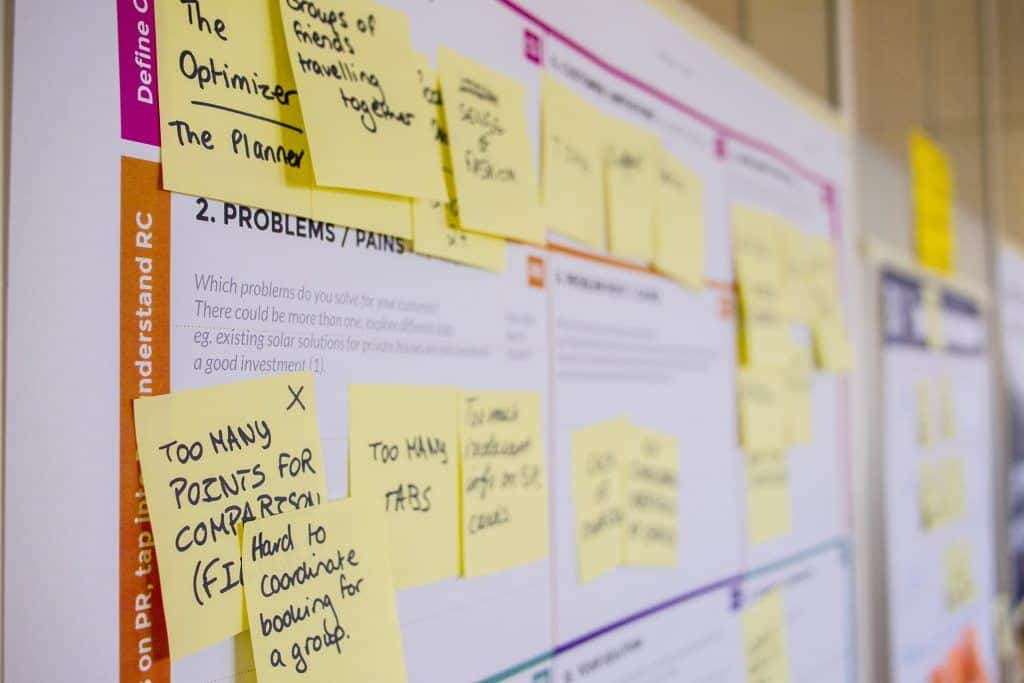
UX Design starts with research into your target audience and their behavior. What questions do visitors have? Where do they drop out? What do they expect based on previous experiences with similar sites? Based on this insight, you design an information structure that matches their thought process. You determine where buttons are located, how your menu is structured, what information comes first and what steps a user goes through to a conversion. Then you test this design with real users and measure where they get stuck. Tools like heatmaps, session recordings and Google Analytics show you where improvements are needed. You repeat this process until the experience feels smooth and conversions increase.

Why UX Design is essential for SMEs now

In practice, we see with small and medium-sized businesses that visitors decide within 3 to 5 seconds whether to stay or leave. That decision depends not only on what you offer, but especially on how quickly and easily they understand it. UX Design emerged in the 1990s when software companies realized that users found their products too complicated. Today, the same applies to websites: an ecommerce store with unclear filters loses customers to a competitor with a well-organized search function. A consulting firm with a contact form that has ten fields gets fewer leads than a competitor that simply displays a phone number at the top. UX Design solves this by eliminating friction and making the path to conversion as short and clear as possible.

What UX Design brings to your business

For an SME entrepreneur, good UX Design means measurably more conversions from the same number of visitors. An ecommerce store that reduces its checkout from five steps to three often sees 15 to 25 percent more completed orders. A service provider that explains its offerings directly on the homepage instead of hiding them behind a menu gets more contact requests. In addition, UX Design lowers your customer service pressure: if visitors find answers themselves, they call or email less. In web design projects from Monkey Vision, we always link UX Design to your business goals, whether that's more leads, higher sales or fewer returns. The result is a site that is not only beautiful, but also works for your target audience and your numbers.
Applications of UX Design

UX Design is applied as soon as you want visitors to perform a specific action on your website or ecommerce store. This can be a purchase, an application, a download or simply finding information. The applications differ per business type and target group, but the core remains the same: make the path to that action as logical and frictionless as possible.

Optimize ecommerce store checkout and conversion funnel

In an ecommerce store, UX Design determines how quickly a visitor goes from product page to payment. In an ecommerce store with 500 products, you often see customers drop out when filling in shipping information or choosing a payment method. By simplifying the checkout to three screens, allowing guest orders and showing payment options at the top, you increase the completion rate by 20 to 30 percent. As an example, a clothing Web shop that displays size charts directly with the product instead of behind a link sees fewer returns and more conversions. UX Design here focuses on removing doubt and shortening steps. In ecommerce store development, we test each screen based on where customers drop out.

Lead generation for B2B service providers

For a consulting firm, SaaS company or technical services provider, UX Design is all about enticing contact. Visitors first want to understand what you do and whether you fit their query. A common mistake is a homepage full of jargon without a clear proposition. By starting your homepage with a concrete problem statement and outlining three recognizable customer situations underneath, you increase the chances that someone will click through to your service or contact you. An example: an IT company that describes its service as "digital transformation" gets fewer leads than a competitor who writes "we automate your accounting and CRM. UX Design helps you make that translation and limit your contact form to name, company and question. More fields means fewer submissions.

Information structure for content-rich websites

For websites with a lot of content such as knowledge bases, portfolio sites or industry information, UX Design is all about findability. Visitors need to get to the right article or case within two clicks. You demand this by designing a logical information structure: main categories in the menu, filters on overview pages and a search function that also recognizes synonyms. An example: a knowledge base with 200 articles sorted only alphabetically loses visitors. The same knowledge base with theme sorting, tags and a search bar increases time on site and lowers the bounce rate. UX Design here determines how you group and present content so visitors don't get lost.

When UX Design is the right choice and when it is not

UX Design is the right choice if you want to increase conversions without attracting more traffic. It works best for websites that already have visitors but produce few conversions. Think of an ecommerce store with 1,000 visitors a month and 10 orders, or a consulting firm with 500 visitors and 2 contact requests. UX Design is less urgent if your site has no traffic yet: then SEO or marketing is the first priority. Even with very niche-oriented B2B sites where visitors are convinced before they come, UX Design yields less than competitive markets where every detail counts.

Want to apply this to your business? Monkey Vision helps SME entrepreneurs with web design, SEO and smart digital solutions. Schedule a no-obligation meeting and find out what's possible for you.

Schedule an introduction

Frequently Asked Questions

No, UX Design is a part of web design but focuses specifically on the user experience. Web design also includes visual design, branding, animations and technical construction. UX Design looks at how users navigate through your site, where they get stuck and how to optimize the path to conversion. A beautiful website can score poorly on UX if the structure is unclear or buttons are hard to find. Conversely, a visually simple site can score extremely well on UX due to clear navigation and fast load times. In web design projects, we combine both: an attractive design that also works intuitively for your target audience.

UX Design you capture during the design or redesign of your website. Conversion optimization you apply to an existing site by testing and adjusting. If you are building a new site or planning a major redesign, start with UX Design to get the structure and flow right. If your site is already live and you want to increase conversions, you start with conversion optimization: A/B testing, heatmaps and small adjustments to text or buttons. In practice, you often see companies first apply UX Design to get the basics right, and then use conversion optimization to get the last few percent out. For SMBs with limited budgets, UX Design upfront usually delivers more than months of testing afterwards.

You start by identifying where visitors are dropping out. In Google Analytics, look for pages with high bounce rates and the conversion funnel: at what step do visitors lose interest? Use tools like Hotjar or Microsoft Clarity to view heatmaps and session recordings. Ask customers or colleagues to use your site while you watch along: where are they searching, where are they clicking wrong, what questions do they have? Based on these insights, create a list of areas for improvement, sorted by impact. Start with quick wins like moving your main call-to-action to the top or simplifying your menu. Larger changes such as a new information structure you plan in a redesign process.

The best first step depends on where you are now with your website and conversions. Already have a site that attracts visitors but generates little? Then schedule a free web design scan by Monkey Vision, 30 minutes in which we go through your site live. You will immediately get three concrete UX improvement points that you can pick up this week, plus an honest estimate of the growth potential for your target audience. No sales pitch, just practical advice on navigation, conversion funnel and mobile experience. Together we'll look at where visitors are dropping out and how to solve that with targeted changes or a redesign.

About the author

Monkey Vision

Monkey Vision is a full-service digital agency at Nijmegen, specializing in web design, SEO, and AI automation for small and medium-sized businesses. The knowledge base has been compiled by our team of online strategists and is continuously updated based on current insights.

Publication date: 26-04-2026
Last update: 26-04-2026