Conversion Optimization (CRO)

Conversion Rate Optimization, CRO, Conversion optimization, Conversion rate optimization, Conversion optimization
Conversion Optimization (CRO) is the systematic improvement of your website so that more visitors perform a desired action. It increases returns without additional marketing budget.

What is Conversion Optimization?

Conversion Rate Optimization (CRO) is the process of systematically improving your website or ecommerce store so that a higher percentage of visitors take a desired action. That action could be a purchase, but it could also be filling out a contact form, downloading a white paper, or requesting a quote. The goal is to extract more value from your existing traffic without an additional budget for advertising or SEO. You test, measure, and refine elements such as text, buttons, forms, and page layout based on user behavior and data.

How Conversion Optimization Works in Practice

The process revolves around measurement, analysis and testing. You start by determining your current conversion rate: what percentage of your visitors take the desired step? Then you analyze where visitors drop out through tools like Google Analytics or heatmaps. Next, you formulate hypotheses: why do visitors leave the page at this point? Is the call-to-action unclear, the form too long or the price not visible enough? Based on those hypotheses, you design variants and test them via A/B testing. The variant that performs better becomes the new standard. You repeat this cyclical process until you see noticeable improvements in conversion, average order value or other KPIs.

Why Conversion Optimization became important for SMBs

Conversion Optimization emerged in the ecommerce world when companies discovered that it is cheaper to better utilize existing traffic than to attract more and more traffic. Advertising costs increase year on year, and organic traffic via SEO requires time and investment. Therefore, for many SMBs, it is more attractive to focus on what is already coming in. An ecommerce store with 10,000 visitors per month and a 1% conversion rate brings in 100 orders. If you lift that conversion rate to 1.5%, the number of orders rises to 150 without additional marketing costs. That profit margin goes directly to the bottom line. In practice, we see many business owners start CRO only after they find that more traffic does not automatically bring in more sales.

What Conversion Optimization delivers for your business

With a thoughtful CRO approach, you get more return on every dollar you put into marketing. You discover which elements on your site are holding visitors back and which ones are actually helping them to click through. These can be simple things like clearer button text or a shorter checkout, but also strategic choices like leaving out unnecessary steps in your funnel. Good web design lays the foundation, but CRO ensures that that foundation actually makes money. At Monkey Vision , we pair SEO strategies with conversion optimization so you not only get more visitors, but those visitors actually convert. That makes the difference between a beautiful website and one that works.


Applications of Conversion Optimization

Conversion Optimization is not just for ecommerce stores. Any business with a website where visitors need to perform an action can work with it. Below you can see concrete situations where CRO makes an impact, from ecommerce to B2B services. The approach differs for each goal, but the principle remains the same: understanding where visitors drop out and making targeted improvements there.

Ecommerce store checkout optimize for higher sales

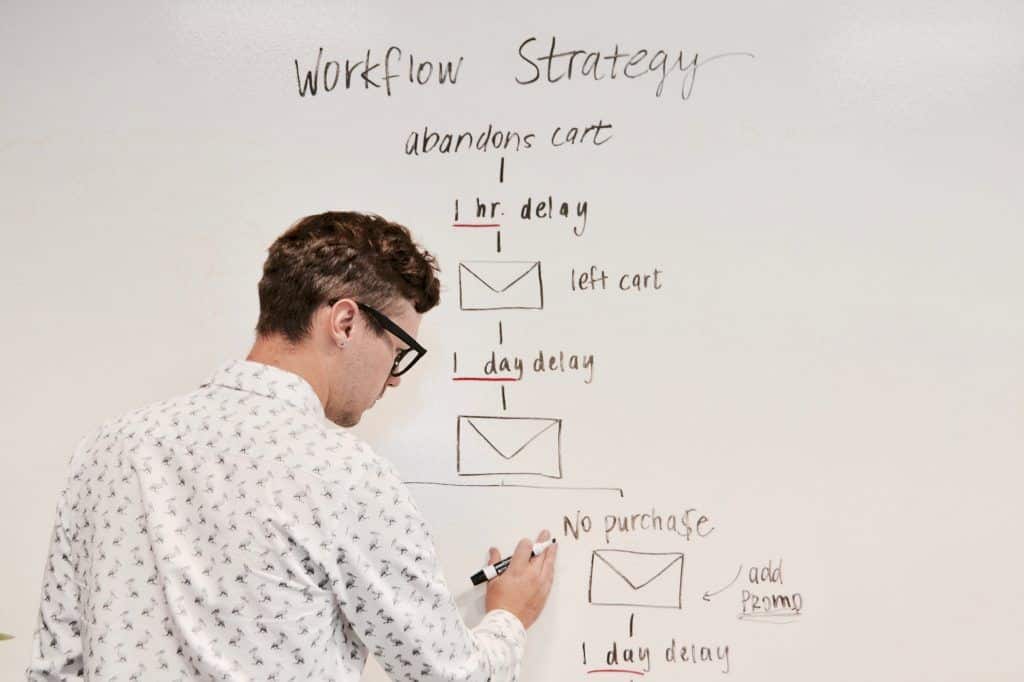
In ecommerce stores, the biggest opportunity often lies in the checkout. Many visitors add products to their cart but do not complete the purchase. Reasons range from unexpected shipping costs to an order process that is too long or unclear. By simplifying the checkout, adding trust signals (such as safe payment methods and return policy) and being transparent about costs, you can significantly increase the percentage of completed orders. An ecommerce store with 500 visitors a day and a 2% conversion rate brings in 10 orders. If you increase that to 2.5% through checkout optimization, that's 12.5 orders per day, almost 1,000 extra orders per year. For a professional ecommerce store, this is one of the most profitable improvements.

Lead generation through contact forms and landing pages

For B2B service providers or consultants, conversion often revolves around bringing in leads through a contact form or request for quote. This is where trust plays a big role. Visitors want to know what to expect: how quickly will they get an answer, what happens to their data, and is this company trustworthy? By setting clear expectations, limiting the form to essential fields and adding social proof (such as customer logos or testimonials), you increase the likelihood that visitors will fill out the form. A consulting firm with 2,000 visitors per month and 20 completed forms (1% conversion) can increase to 30 forms (1.5%) through targeted optimization, yielding 10 additional leads per month with no additional ad spend.

Increasing average order value with upsell and cross-sell

Conversion Optimization is not just about more orders, but higher order values. By offering related products or upgrades at the right time, you can increase the average order value. Consider an ecommerce store that immediately offers a laptop bag or extra warranty with a laptop, or a SaaS company that suggests an annual subscription at a discount during checkout. The trick is to do this naturally, without overwhelming the customer. In practice, we see that well-timed upsells can increase order value by 10 to 20%, which directly impacts the profit margin without requiring you to acquire more customers.

When Conversion Optimization is the right choice and when it isn't

CRO works best when you already have enough traffic to collect reliable data. Do you have less than 1,000 visitors per month? Then it's often smarter to first invest in more traffic through SEO or advertising. Also, if your website is technically out of order, has poor load times or is not mobile-friendly, you should work on that first. Conversion Optimization is not a quick fix for a bad product or unclear proposition. It reinforces what is already working, but cannot solve a fundamental problem. Start CRO when you are clear on what you want to achieve, what actions visitors need to perform and where you are now in terms of conversion.

Want to apply this to your business? Monkey Vision helps SME entrepreneurs with web design, SEO and smart digital solutions. Schedule a no-obligation meeting and find out what's possible for you.

Schedule an introduction

Frequently Asked Questions

No, but they do overlap. UX design focuses on the overall user experience and designing an enjoyable, logical interface. Conversion Optimization uses insights from UX, but focuses specifically on increasing actions that deliver value, such as purchases or signups. UX can be broad and deals with all interactions, while CRO is measurable and targeted. A good UX lays the foundation, CRO refines that foundation with data and testing to get concrete results. You can have a beautiful Web site with excellent UX, but without targeted CRO, you may not get the maximum return from it.

It depends on your traffic and risk. A/B testing is the safest method because you test two variants side by side and only implement what works better. But you need enough traffic to get reliable results, usually at least a few thousand visitors per month. If you have less traffic or want to make an obvious improvement quickly (such as fixing a broken button), you can adjust immediately and then measure. For strategic changes such as a new checkout flow or landing page layout, testing is always recommended. For SMEs with limited traffic, we often work with sequential testing instead of simultaneous A/B splits, so you can still optimize data-driven.

The biggest mistake is testing without hypothesis. Many companies randomly change elements without understanding why visitors drop out. This does not produce structural improvement. Another pitfall is drawing conclusions too quickly: a test must run long enough to be statistically reliable, often at least two weeks. We also often see that companies only focus on the homepage while the real conversion killer is one step further, for example in the ordering process or on the product page. Furthermore, many business owners ignore mobile traffic, while that is often more than half of the visitors. Always test on all devices and focus on the pages where visitors actually need to perform an action.

The best first step is to understand where you are now. Do you already have traffic but few conversions? If so, it pays to have your site scanned for areas of improvement. Schedule a free conversion scan by Monkey Vision, a 30-minute session where we walk through your website live. You immediately get three concrete improvements you can pick up this week, plus an honest estimate of the growth potential for your situation. No sales pitch, just practical advice on where to get the most out of Conversion Optimization.

About the author

Monkey Vision

Monkey Vision is a full-service digital agency at Nijmegen, specializing in web design, SEO, and AI automation for small and medium-sized businesses. The knowledge base has been compiled by our team of online strategists and is continuously updated based on current insights.

Publication date: 26-04-2026
Last update: 26-04-2026