Illustrations

Illustration, Drawings, Graphic illustrations, Visual illustrations, Illustrations, Drawn images, Artwork
Illustrations are visual drawings that clarify or reinforce a message. They make complex information more accessible and increase recognizability.

What are illustrations?

Illustrations are hand-drawn or digitally created images that tell a story, explain a concept, or reinforce a brand message. Unlike photography or stock images, illustrations are custom-made for a specific application, making them unique and fully aligned with your brand identity. They range from simple line drawings to complex scenic compositions and are used on websites, in brochures, on social media, and in presentations.

How illustrations work in visual communication

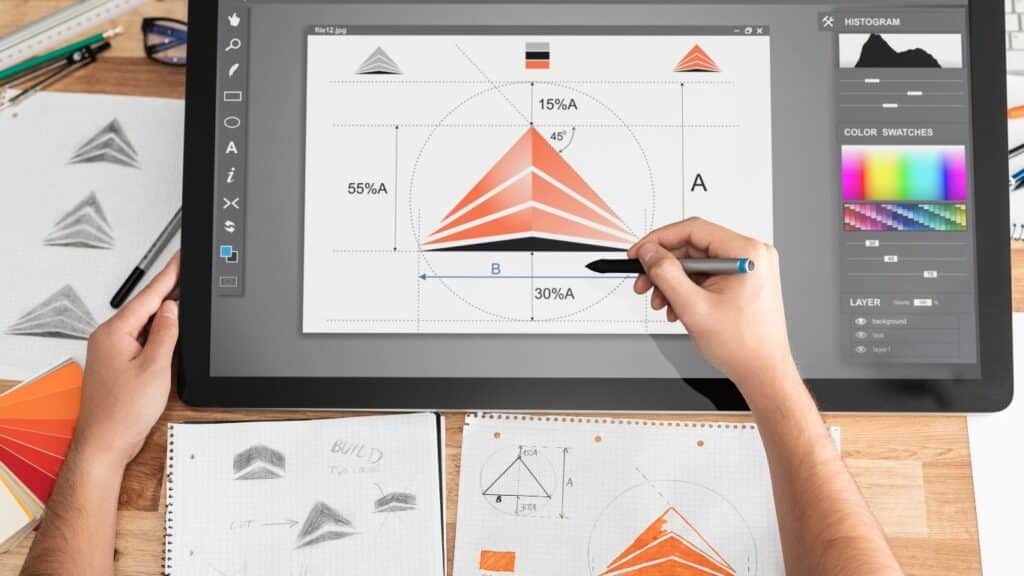
An illustration begins with a briefing in which you describe the desired message, style, and application. An illustrator translates this into sketches, after which the chosen direction is developed in terms of color, line work, and composition. Depending on the goal, you can choose a flat design style, isometric perspectives, or character-driven illustrations. The technique can be analog (ink, watercolor) or digital (vector, bitmap). The final result is delivered in formats suitable for print (CMYK, high resolution) or the web (RGB, SVG for scalability). By maintaining a consistent visual language across all illustrations, a recognizable style is created that is immediately associated with your brand.

Why illustrations are more important now than before

At a time when stock photos everywhere make companies look the same, illustrations offer an opportunity to stand out. They make abstract services tangible: a cloud solution becomes understandable through a visual metaphor, a complex workflow becomes clear through a step-by-step diagram in illustration form. In addition, illustrations can be designed inclusively and culturally neutral, which fits contemporary diversity and accessibility requirements. For SMBs looking to stand out without budgets for photo shoots or video production, illustrations are a scalable alternative that can be deployed both online and offline.

What illustrations deliver for Dutch SMEs

Using illustrations makes information understandable faster, especially with technical or abstract topics. A software company that uses illustrations to explain its dashboard features finds that visitors stay on the page longer and are more likely to request a demo. A consulting firm that visualizes its approach with a custom process illustration communicates professionalism and accessibility at the same time. Illustrations also reinforce your brand identity and corporate identity: they are fully custom and can match your color palette, typography and tone of voice exactly. Moreover, they are legally secure: no licensing issues or stock photos that also pop up at competitors. For companies investing in web design and user experience, illustrations are a powerful tool to increase conversion through visual clarity and emotional connection.

Applications of illustrations

Illustrations are widely applicable, from web pages to offline communications. Below are four specific application areas in which illustrations provide measurable value to SMEs, followed by a decision framework for determining when illustrations are or are not the right choice.

Making complex services understandable on landing pages

A B2B software vendor with a technical product often struggles to make its operation clear at a glance. Illustrations offer a solution here by visualizing processes step by step. Consider an illustration that shows the data flow from input to reporting, with icons for each system. Visitors understand faster what the software does and where their problem is solved. In practice, we see that landing pages with process illustrations are visited longer on average and achieve higher conversion rates than pages with only text or stock photos. For service providers such as accountants, IT companies or consulting firms, this concept also works: a visual roadmap of the collaboration creates trust and lowers the threshold for contacting them.

Strengthen brand recognition through social media and content marketing

Illustrations give your social media statements a unique look. Where competitors use stock photos, your feed stands out with a consistent visual style. For example, an online store in sustainable products can have its own illustration created for each product category to match the brand values: natural colors, hand-drawn lines, warm look. You use these illustrations in Instagram carousels, Pinterest pins and blog headers. The result is higher recognition and more engagement. In addition, illustrations are ideal for storytelling: you can create characters or scenarios that recur in different campaigns, allowing followers to build a connection with your brand. Moreover, for companies investing in content marketing and SEO, custom illustrations are unique enough to rank well in Google Images as featured images.

Clarify onboarding and instructions in ecommerce stores and SaaS

Ecommerce stores and SaaS platforms use illustrations to guide users through complex flows. An ecommerce store in custom furniture can use illustrations to visualize the ordering process: from size selection to delivery. Each step gets its own illustration that matches the brand identity, so customers know exactly where they stand. This reduces the number of abandoned shopping carts. For SaaS companies, illustrations work well in onboarding screens: instead of text blocks, you see a friendly illustration that explains the function. Our trajectories show that users start working independently faster when instructions are visually supported. For example, a project management tool that uses illustrations to show how to create a first project sees new users become active within five minutes instead of after 20 minutes or dropping out altogether.

Visually enhance presentations and pitches

For consulting firms, architects and creative service providers, presentations are a crucial sales moment. Illustrations make your pitch more visually appealing and professional than generic PowerPoint templates. For example, a strategy agency can visualize its approach with a custom illustration that shows the different phases, including icons for workshops, analyses and implementation. This makes the proposition concrete and shows that you are investing in quality. Illustrations also work well in offer documents: instead of a boring PDF, the customer gets a visually appealing document in which the process is clearly outlined. Companies that apply this report higher win-rates because the quotation sticks better and comes across as more professional than those of competitors.

When illustrations are the right choice and when they are not

Illustrations are the right choice when you want to build a unique visual identity, make abstract or technical information understandable, or when photography doesn't fit your brand or product. They are also suitable when you want to communicate consistently across channels without relying on photo shoots. Illustrations are less suitable when authenticity and realism are crucial, for example for products where customers want to see the exact look (fashion, interior design). Photography also works better for news articles or journalistic content. A common mistake is to keep illustrations too generic: if they look too much like standard icon sets, you lose distinctiveness. Therefore, invest in custom illustrations that really fit your brand identity and target audience.

Want to apply this to your business? Monkey Vision helps SME entrepreneurs with web design, SEO and smart digital solutions. Schedule a no-obligation meeting and find out what's possible for you.

Schedule an introduction

Frequently Asked Questions

No, while they are all visual tools, the purpose differs. Icons are small, symbolic images that indicate a function or category, often part of an interface. Infographics combine data, text and visual elements to present information clearly. Illustrations, on the other hand, are stand-alone images that tell a story or create an atmosphere. They can be used together, though: an infographic often contains illustrative elements, and icons can be incorporated into illustrations. The difference is in their complexity and narrative power. Illustrations tend to be richer in detail and emotion, while icons are functional and minimalist. For a Web site, you can use icons in navigation and illustrations on landing pages to reinforce the brand message.

Vector illustrations are composed of mathematical paths and infinitely scalable without loss of quality. They are ideal for logos, icons, web illustrations and print in various formats. Bitmap illustrations (such as PNG or JPG) consist of pixels and are suitable for detailed, painterly styles with textures and color transitions. Choose vector if you want to use illustrations on both business cards and billboards, or if your Web site needs to be responsive. Choose bitmap if you want an organic, handmade look with lots of detail, such as for editorial illustrations or art campaigns. In practice, illustrators often provide both: a vector file for flexibility and a high-res bitmap for specific applications. For web design, vector is preferred because of loading speed and scalability on different screen sizes.

The most common mistake is choosing illustrations that don't match your brand identity. A clean, corporate website with playful cartoon illustrations feels inconsistent and undermines credibility. A second mistake is using too many different styles interchangeably, such as a mix of flat vector illustrations and detailed watercolors. This disrupts visual calm and weakens recognition. A third pitfall is placing illustrations without a clear purpose: decorative pictures that add nothing to understanding or conversion. Make sure every illustration has a function, whether that is explanation, atmosphere or navigation. Finally: displaying illustrations too small or too large. A detailed illustration that becomes unreadable on mobile, or a simple illustration that fills an entire hero section, doesn't work. Always test on different devices and solicit feedback from users outside your own team.

The best approach depends on your brand phase and communication goals. Already have a brand identity but notice your message is not getting across? Then schedule a free 30-minute brand analysis at Monkey Vision. We look at where illustrations can strengthen your story and what style fits your target audience and positioning. You will immediately receive three concrete deployment options, a style advice and a realistic estimate of investment and lead time. No sales pitch, just practical advice from experience with dozens of SME brands. Discover how visual brand identity and illustrations together increase your distinctiveness.

About the author

Monkey Vision

Monkey Vision is a full-service digital agency at Nijmegen, specializing in web design, SEO, and AI automation for small and medium-sized businesses. The knowledge base has been compiled by our team of online strategists and is continuously updated based on current insights.

Publication date: 26-04-2026
Last update: 26-04-2026