Conversion Rate (CR)

Conversion rate, Conversion rate, CR, Conversion rate, Conversion rate
Conversion rate (CR) is the percentage of visitors who complete a desired action on your website. It gives direct insight into the effectiveness of your site.

What is conversion rate?

Conversion rate is the percentage of visitors who complete a predetermined action on your website, ecommerce store or landing page. You calculate it by dividing the number of conversions by the total number of visitors and multiplying by 100. A conversion can be a purchase, but also a completed form, a download, a newsletter subscription or a phone call. The conversion rate shows how effectively your Web site converts visitors into customers or leads.

How to calculate conversion rate?

The calculation is simple but powerful. Suppose your ecommerce store receives 5,000 visitors in a month and 150 people make a purchase. Your conversion rate is then (150 / 5,000) × 100 = 3%. That percentage applies to that specific action. If you measure multiple goals, for example, both purchases and newsletter subscriptions, calculate a separate conversion rate for each goal. That way you can see exactly where your site is performing well and where it isn't. In Google Analytics, you can set up goals and have them tracked automatically. Make sure you only count relevant visitors: bots and internal sessions distort your figure.

Why conversion rate is central to online marketing

The term originated in the early 2000s, when companies were first able to really measure how many visitors took action. Before then, online marketing was largely guesswork. With Web analytics, it became possible to track every step of the customer journey. Conversion rate became the standard for determining whether a Web site, campaign or product page was working. Today, it is still the most important performance indicator for ecommerce stores, lead generation and campaigns. Without a clear conversion rate, you don't know if more traffic also generates more sales. The difference between a conversion rate of 1% and 3% can save an SME ecommerce store thousands of euros per month.

What makes a good conversion rate work for your business

A higher conversion rate means getting more out of the same number of visitors. Instead of spending more money on ads or SEO, improve what you already have. That makes growth more predictable and cheaper. At Monkey Vision , we regularly see SMBs with 2,000 visitors per month stuck at a conversion rate of 0.8%. With targeted conversion optimization, that rises to 2% or more, tripling sales without an additional marketing budget. Plus, a rising conversion rate gives confidence: you know your website is doing what it was built to do. It also helps you prioritize. If your conversion rate is low, it makes little sense to attract more visitors until your site converts better.
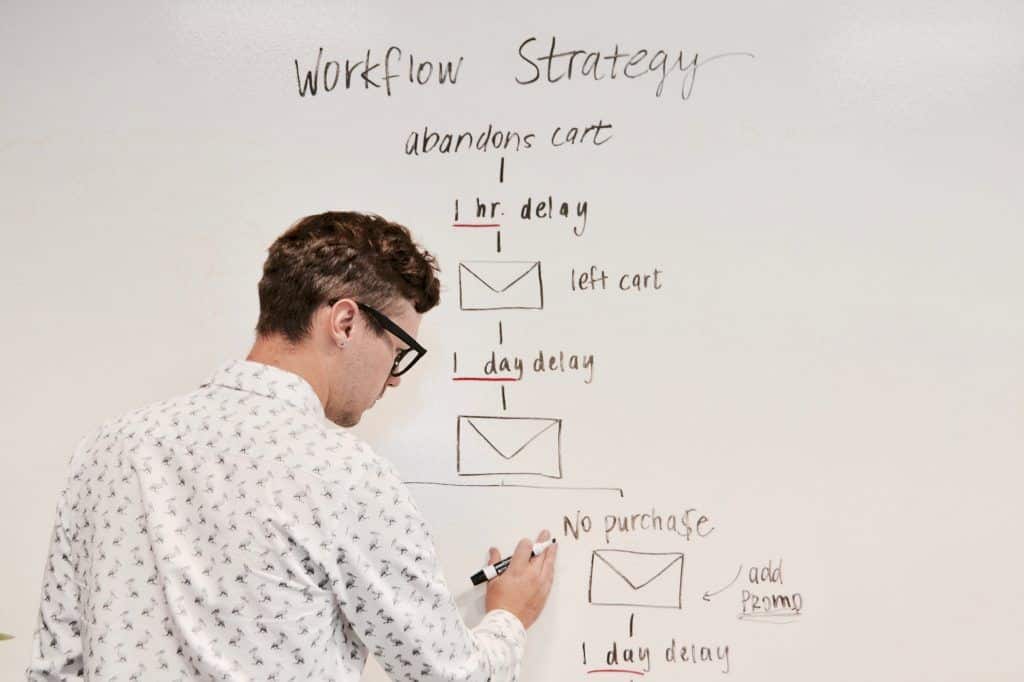

Applications of conversion rate

Conversion rate is not just a number on a dashboard. It's a decision-making tool you use to make concrete choices about design, content, campaigns and budget allocation. Below you can see where SMB companies are using conversion rate in practice and what insights it provides.

Conversion rate for ecommerce stores and product pages

In an ecommerce store, you measure conversion rate per product page, category and checkout step. That way you find out where customers drop out. An ecommerce store with 400 products often sees that 20% of the products generate 80% of the turnover, but that those products do not always have the highest conversion rate. By improving product pages with low conversion rates, for example with better photos, clearer specifications or customer reviews, you get more revenue from existing traffic. The checkout is also crucial: a drop from 5% to 3% conversion rate between shopping cart and payment costs direct sales. In our projects we therefore always test the checkout separately. You can find more about ecommerce store design at ecommerce store design.

Conversion rate for lead generation and B2B service providers

For a B2B service provider, the conversion rate is often a contact form, a quote request or a phone number called. Here the conversion rate is usually between 1% and 5%, depending on the industry and the complexity of the service. A conversion rate of 2% means you get 20 leads from 1,000 visitors. If you know that 1 out of 5 leads will become customers, that yields 4 new customers. By increasing the conversion rate to 3%, you get 30 leads and 6 customers, a 50% increase. That makes the difference between waiting for customers and growing structurally. In practice, we see that clear call-to-actions, trust signals such as certifications and a fast load time affect the conversion rate the most.

Conversion rate for campaigns and landing pages

When you advertise through Google Ads or social media, you measure the conversion rate per campaign and per landing page. A campaign with many clicks but a low conversion rate costs money without results. Matching the landing page to the ad, for example by using the same header and promise, often increases the conversion rate immediately. An example: a campaign for a free SEO scan attracts 500 visitors with a conversion rate of 4%, good for 20 sign-ups. By simplifying the page and shortening the form, the rate increases to 7%, yielding 35 signups. That's 75% more leads with the same ad budget. More on this at cost per acquisition.

When conversion rate is the right focus and when it is not

Conversion rate is valuable if you have enough traffic to draw reliable conclusions. Below 500 visitors per month, fluctuations are often coincidental. Also, if your conversion goal is unclear, for example because visitors can do different actions, the figure becomes less useful. In those cases, it is better to focus on your goal first. In addition, conversion rate says nothing about the quality of your leads or customers. A high conversion rate with low average order value is less valuable than a lower rate with higher orders. So always look at conversion rate in combination with sales, customer lifetime value and acquisition costs. Only then will you get a complete picture.

Want to apply this to your business? Monkey Vision helps SME entrepreneurs with web design, SEO and smart digital solutions. Schedule a no-obligation meeting and find out what's possible for you.

Schedule an introduction

Frequently Asked Questions

No, those are two different metrics. Click-through rate (CTR) measures how many people click on an ad or search result. Conversion rate measures how many of those visitors then complete a desired action, such as a purchase or subscription. You can have a high CTR but a low conversion rate if your landing page doesn't convince. Conversely, a low CTR with a strong landing page can still yield good results. In practice, you optimize both: first the CTR to attract traffic, then the conversion rate to monetize that traffic. Both metrics can be found in Google Search Console and your advertising platform.

It depends a lot on your sector, type of conversion and traffic source. Ecommerce stores average 1% to 3%, B2B service providers 2% to 5%, and landing pages for specific campaigns 5% to 15%. But don't compare yourself blindly to averages. A complex B2B service with long sales processes logically has a lower conversion rate than an impulse purchase in an ecommerce store. More important is your own development: does your conversion rate increase after improvements? And does that increase yield more sales? Also measure per channel: visitors from organic search traffic often convert better than social media traffic, because they search more specifically. Focus on growth relative to yourself, not relative to a theoretical average.

Start measuring. Set goals in Google Analytics or your ecommerce store platform and track for at least a month. This will give you a reliable baseline measurement. Then see where visitors drop out: which pages have a lot of traffic but few conversions? Often quick wins lie in clear call-to-actions, faster loading time and fewer distractions on the page. Test one tweak at a time so you know what works. Many SMBs start by shortening forms or adding trust signals such as reviews. If you want to improve structurally, consider a conversion optimization journey with A/B testing and user research.

Want to know where your website is losing visitors and how to profit from that immediately? In a free 30-minute conversion scan, we walk through your site and your Analytics data live. You get three concrete areas for improvement that you can pick up this month, plus an honest estimate of your growth potential. No sales pitch, just practical advice from our experience with dozens of SME ecommerce stores and service providers. Schedule a session through SEO services from Monkey Vision and discover what a higher conversion rate can mean for your revenue.

About the author

Monkey Vision

Monkey Vision is a full-service digital agency at Nijmegen, specializing in web design, SEO, and AI automation for small and medium-sized businesses. The knowledge base has been compiled by our team of online strategists and is continuously updated based on current insights.

Publication date: 26-04-2026
Last update: 26-04-2026