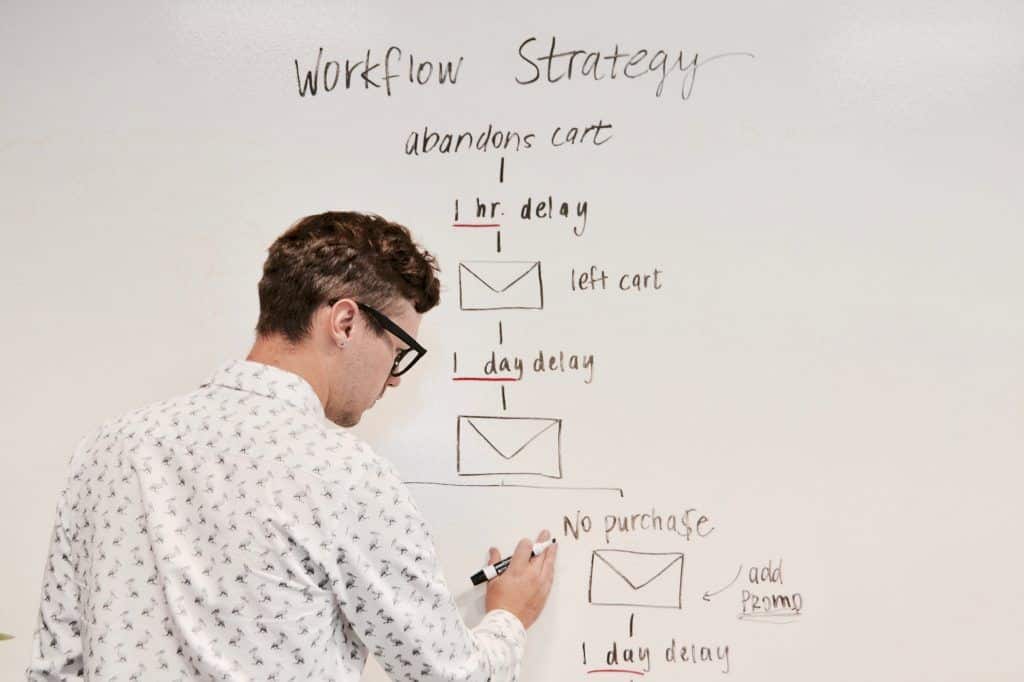
An ecommerce business is one that sells products or services over the Internet, with the entire transaction taking place digitally. It includes everything from product presentation and payment processing to logistics and customer service. Unlike physical stores, an ecommerce business runs on digital infrastructure: an ecommerce store, payment providers, inventory systems and shipping partners. For SME entrepreneurs, this means an accessible way to sell nationwide or internationally without physical locations.
How an ecommerce business works
An ecommerce company builds on four pillars: the platform (often Shopify, WooCommerce or a custom solution), the payment process (via Mollie, Adyen or Stripe), the logistics (in-house warehouse or dropshipping) and the marketing(SEO, advertising, email). A customer views products online, places items in a shopping cart, pays digitally and receives the product sent home. Behind the scenes, inventory, order processing and customer data synchronize through integrations. For an ecommerce store with 200 products, this means that every product page, every shipping option and every payment method must work flawlessly. A failure in one link immediately costs sales.
Why ecommerce companies made breakthroughs
Ecommerce emerged in the 1990s when payments and shipping became reliable enough for consumer confidence. The breakthrough came in the early 2000s with wider Internet adoption and secure payment methods such as iDEAL in the United States. Since then, the model has exploded: customers now expect 24/7 availability, fast delivery and easy returns. For SMEs, ecommerce is relevant because it removes geographical limitation. A bakery in Groningen can sell artisan products nationwide; a B2B supplier can let customers order online without a representative. The barrier to entry is lower than ever, but competition is fierce.
What an ecommerce business brings to SME entrepreneurs
A well-designed ecommerce business gives you scalability without commensurate staff growth. You sell while you sleep, reach new markets and collect data on customer behavior. An ecommerce store with 50 orders per week can grow to 500 without needing larger premises. At the same time, it requires investment in professional ecommerce store design, reliable hosting and ongoing optimization. The combination of conversion optimization and smart marketing automation determines whether you are profitable or drowning in advertising costs. Our trajectories show that SMEs often underestimate how much time customer service and returns processing takes. Automate where you can, but keep the human touch where it makes a difference.