Customer Retention

Customer retention, Customer loyalty, Customer loyalty, Customer loyalty, Retention, Customer retention
Customer Retention is the percentage of customers who return or remain active over a period of time. It determines how much revenue you retain without new customers.

What is Customer Retention?

Customer Retention is the percentage of customers who remain active or return to your company over a period of time. It measures how many existing customers you retain instead of them switching to a competitor or stopping purchasing. An 80% retention rate over a year means that of every 100 customers, 80 are still customers after 12 months. For SMBs, this figure is often more important than new customer acquisition because retaining an existing customer is on average five times cheaper than acquiring a new one.

How Customer Retention Works in Practice

You calculate Customer Retention by dividing the number of customers at the end of a period by the number of customers at the beginning, minus new customers in that period. An ecommerce store with 500 customers on January 1, 100 new customers and 450 active customers on December 31 has a retention rate of 70%. The formula is: ((450 - 100) / 500) x 100 = 70%. This percentage varies greatly by industry. A SaaS company aims for 90% or higher, while a retailer is already performing well at 60%. The measurement period depends on your sales cycle: monthly for subscriptions, annually for B2B services.

Why customer retention is central to modern business operations

Customer Retention gained traction beginning in the 1990s when companies discovered that it is cheaper to service existing customers than to acquire new ones. With the advent of CRM systems and marketing automation, it became easier to track customer behavior and measure retention. At a time when customers compare and switch easily, retention determines your profitability. A customer who stays for three years often generates more margin than 10 one-time buyers. In addition, satisfied returning customers refer more often, further lowering your acquisition costs.

What Customer Retention delivers for your business

With a strong retention strategy, you build predictable sales. You know how many customers you retain monthly or annually, which makes budgeting and growth plans more reliable. Returning customers buy on average 30% more per transaction and are less price sensitive. They know your methods and need less guidance, which saves time. A well-crafted customer retention approach combines SEO for findability, email marketing for follow-up and a CRM system to automate contact moments. Monkey Vision helps SMBs integrate these elements into a workable online marketing strategy that makes retention measurable and manageable.

Applications of Customer Retention

Customer Retention plays a role in many business processes. From subscription models to service contracts, wherever customers may return or stay, measure retention to adjust your approach. Below you'll see where SMB companies are specifically deploying customer retention and what choices are involved.

Subscriptions and recurring services

Companies with a subscription model or retainer contract measure retention monthly or quarterly. A software vendor with 200 customers and 15 terminations per month has a monthly churn rate of 7.5%, representing a retention rate of 92.5%. By analyzing exit interviews and usage data, you discover why customers quit. It often reveals that onboarding was too short or that customers didn't find features. An improved knowledge base, proactive check-ins after 30 days and an automated email series can reduce churn by 20 to 40%. Retention here is directly linked to lifetime value and predictability of cash flow.

Ecommerce and repeat purchases

Ecommerce stores measure retention by looking at how many customers make a second purchase within six or 12 months. A dietary supplement store with a 45% retention rate knows that nearly half of first-time buyers return. Through personalized product recommendations, loyalty programs and reminder emails, you increase this percentage. A customer who buys twice has a 60% chance of a third purchase. Retention in ecommerce depends heavily on usability of the ecommerce store, delivery time and customer service. Companies that invest in email retargeting and personalized landing pages often see a 15 to 25% increase in repeat purchases within the first year.

B2B service and account management

With B2B companies, you measure retention by contract or project. A marketing agency with 20 regular clients and three losses per year has an 85% annual retention rate. Here, retention is all about relationship management: regular contact, proactive reporting and thinking about the client's strategy. A CRM system helps you keep track of when you last had contact and what actions are open. Many SMEs lose customers not because of poor quality, but because of lack of visible initiative. Quarterly reporting, an annual strategy session or an integrated CRM dashboard can increase retention by 10 to 20 percentage points.

When Customer Retention is the right focus and when it is not

Retention makes sense if you have an existing customer base and your product or service is suitable for repeat business. For companies with one-time high-ticket sales such as renovations or weddings, retention is less relevant, there you count referrals. Even for a high-growth start-up, acquisition can temporarily be more important than retention, especially if your market is not yet saturated. But as soon as your acquisition costs rise or your market matures, the priority shifts. A good rule of thumb: measure your retention starting when you have 10 or more returning customers per month. Below that, the data set is too small for reliable conclusions.

Want to apply this to your business? Monkey Vision helps SME entrepreneurs with web design, SEO and smart digital solutions. Schedule a no-obligation meeting and find out what's possible for you.

Schedule an introduction

Frequently Asked Questions

No, Customer Retention measures whether customers come back, customer satisfaction measures how satisfied they are. A customer can be satisfied but still not come back, for example, because the need was one-time. Conversely, a customer may return out of convenience or lack of alternatives, without being truly satisfied. Retention is a hard KPI that you see in sales and customer numbers. Satisfaction you measure through surveys such as Net Promoter Score or customer satisfaction scores. For sustainable customer retention, you need both: satisfied customers stay longer and refer more often. But retention alone won't tell you why customers stay or go, for that you need qualitative feedback.

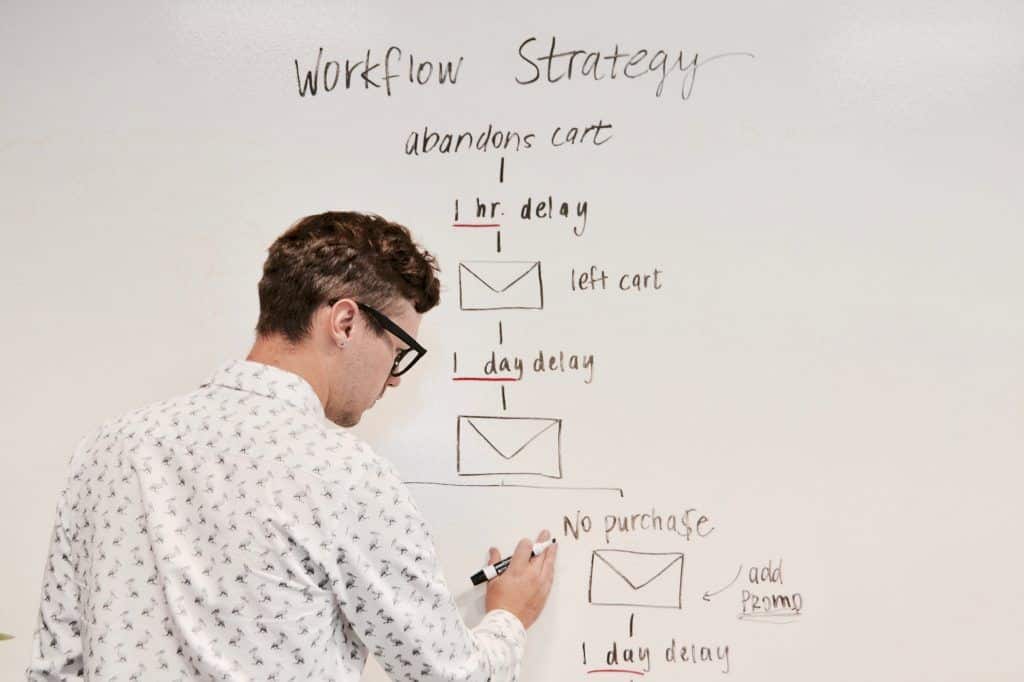
A CRM system and email marketing complement each other; they are not alternatives. Your CRM records customer history, contact moments and preferences, while email marketing uses that data to send automated follow-ups. Without CRM, you miss context: you don't know when a customer last bought or what questions he asked. Without e-mail marketing, you remain reactive rather than proactive. In practice, the combination works best: your CRM triggers an e-mail after 60 days of inactivity, after a purchase or at a birthday date. Companies that integrate both tools through marketing automation see 20 to 30% higher retention on average than those that only follow up manually.

Start by choosing a measurement period that fits your sales cycle: monthly for subscriptions, quarterly for services, annually for B2B contracts. At the beginning of the period, count how many active customers you have. At the end, count how many are still active, minus new customers during that period. Divide that by the starting number and multiply by 100. An ecommerce store with 300 customers on January 1, 80 new customers and 250 active customers on April 1 has a retention rate of ((250 - 80) / 300) x 100 = 56.7%. Record this figure monthly in a spreadsheet or dashboard. Once you have three to six measurements, you'll see a trend. Use that trend to test: improve onboarding, send reminder emails or call inactive customers. Measure again after three months and compare.

The best approach depends on your current customer process and the data you already collect. Do you have a CRM but no automated follow-up? Or do you not yet measure retention structurally? Schedule a free marketing scan of 30 minutes at Monkey Vision. We walk you through your current customer process, from first contact to repeat purchase, and give you three concrete points of improvement you can pick up this month. You will also get an honest assessment of which tools and automations fit your scale and budget. Not a sales pitch, but practical advice that you can use immediately to make customer retention measurable and controllable.

About the author

Monkey Vision

Monkey Vision is a full-service digital agency at Nijmegen, specializing in web design, SEO, and AI automation for small and medium-sized businesses. The knowledge base has been compiled by our team of online strategists and is continuously updated based on current insights.

Publication date: 26-04-2026
Last update: 26-04-2026