Lead Generation Funnels

Lead Funnel, Acquisition Funnel, Conversion Funnel, Lead Funnel, Lead Generation Funnel, Sales Funnel
A lead generation funnel is a structured process that gradually converts website visitors into customers. It is relevant for any small or medium-sized business that wants to acquire customers online.

What Are Lead Generation Funnels?

A lead generation funnel is a structured process that guides potential customers through various phases, from initial contact to concrete interest and ultimately to becoming a paying customer. The model visualizes how a large group of visitors gradually narrows down to a smaller group of actual buyers. Each stage requires a different approach, ranging from raising awareness and building trust to making concrete offers and facilitating decision-making.

How a lead generation funnel works

The funnel consists of three main phases. At the top is the awareness phase, in which you attract as many relevant visitors as possible through content, SEO, or ads. In the middle is the consideration phase, where visitors actively gather information and compare your offering with alternatives. At the bottom is the decision phase, where leads are ready for a conversation, a quote, or a purchase. Between each phase, you set up barriers such as a white paper download, newsletter sign-up, or demo request. These barriers help you distinguish between passive visitors and serious prospects. The goal isnโ€™t to retain everyone, but to move the right people forward.

Why lead generation funnels emerged

The funnel model originates from traditional sales, where salespeople have been working with phases such as prospecting, qualification, and closing for decades. With the rise of digital marketing, it became clear that websites need the same logic. Visitors arrive through various channels, have different information needs, and arenโ€™t all ready to buy. By applying the funnel model online, you can create more targeted content, develop better SEO strategies, and allocate your advertising budget more efficiently. The model helps you understand where visitors drop off and which steps you need to improve.

What lead generation funnels deliver for small and medium-sized businesses

A well-designed funnel makes your marketing results predictable. You can see how many visitors you need to acquire one customer, where the biggest drop-offs occur, and which content or campaigns work best. This simplifies budgeting and helps you develop realistic growth scenarios. In practice, we see with SMB clients that a clear funnel makes the difference between gambling with your ad budget and driving conversions. By optimizing each phase, you get more out of the same traffic. Whatโ€™s more, with marketing automation, you can automate many steps, from email sequences to lead scoring. That saves time and ensures consistent follow-up, even if your team is small.
Applications of Lead Generation Funnels

Lead generation funnels arenโ€™t just for ecommerce stores or large companies. Service providers, consulting firms, and local businesses also use this model to acquire customers online. The structure adapts to any type of offering and purchasing process. Below are four concrete applications that align with Dutch SME practices.

B2B service providers with long purchasing processes

For consulting firms, IT service providers, or recruitment agencies, it often takes months for a lead to become a client. The funnel helps you gain insight into and steer that process. At the top, you attract visitors with practical content such as white papers, checklists, or webinars. In the middle, you offer a free scan, quick scan, or intake. This gives you contact information and shows whether the lead is a good fit for your services. At the bottom, a quote discussion or pilot follows. By measuring each phase, you can see where leads drop off. For example: lots of downloads but few intakes? Then your content may be too general, or your intake barrier may be too high. With these insights, you can make targeted adjustments and increase your conversion rate without buying more traffic.

Ecommerce stores with products that require an explanation

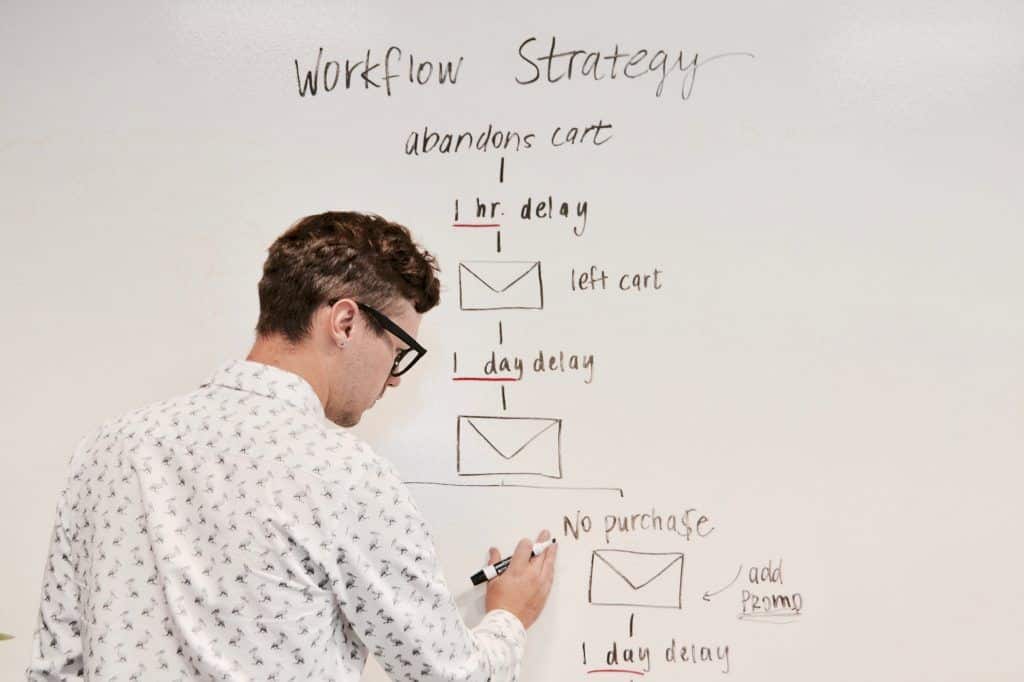
Do you sell technical products, sustainable solutions, or custom work? If so, visitors rarely buy right away. A sales funnel helps you first inform your visitors and build trust. At the top, use SEO content that answers frequently asked questions or compares products. In the middle, offer a product guide, configurator, or free consultation. At the bottom, the purchase takes place, possibly with a discount code for newsletter subscribers. An example: a solar panel ecommerce store attracts visitors with articles about payback periods and subsidies. The store collects email addresses through a free ROI calculator. This is followed by a series of emails featuring case studies, warranty information, and a personalized offer. This is how you transform search traffic into qualified leads, even if the actual purchase takes place offline.

Local businesses with physical locations

Even if you ultimately welcome customers in your store, showroom, or practice, you can still use a funnel. The goal isnโ€™t always an online purchase, but rather an appointment, reservation, or inquiry. At the top, you drive local traffic through local SEO, Google Maps, or ads. In the middle, you offer a virtual tour, an online introduction, or a free trial session. At the bottom, visitors can book an appointment. An example: a dental practice in Nijmegen publishes blogs about fear of the dentist and cosmetic treatments. Visitors can book a free initial consultation via an online form. The practice sends a welcome video and checklist in advance. This makes the first appointment feel more accessible and reduces the number of no-shows.

When a lead generation funnel is the right choiceโ€”and when it isnโ€™t

A funnel works well if your offering requires explanation, if customers donโ€™t buy on impulse, or if you need multiple touchpoints to build trust. Think of B2B services, high-priced products, or complex solutions. A funnel works less well for simple, inexpensive products that visitors buy immediately. In that case, a shorter optimization strategy is more effective. Also, if you donโ€™t have time to create content or follow up on leads, a funnel makes little sense. You may collect contact information, but youโ€™ll miss out on opportunities. Opt for a funnel if youโ€™re willing to invest in content, follow-up, and measurement.

Want to apply this to your business? Monkey Vision helps SME entrepreneurs with web design, SEO and smart digital solutions. Schedule a no-obligation meeting and find out what's possible for you.

Schedule an introduction

Frequently Asked Questions

The terms are often used interchangeably, but there is a subtle difference. A lead generation funnel focuses on collecting and qualifying contact information, from an unknown visitor to a qualified lead. A sales funnel begins where the lead generation funnel ends and focuses on converting that lead into a paying customer. In practice, both models overlap. Many companies use a single integrated model that covers both phases. For small and medium-sized businesses with a small team, itโ€™s more practical to treat both under a single umbrella, as long as you clearly distinguish between marketing activities (awareness, generating interest) and sales activities (quotes, closing deals).

A funnel works linearly: visitors come in, some become customers, and the rest drop off. A flywheel model runs continuously and leverages existing customers to attract new ones through reviews, referrals, and repeat purchases. Choose a funnel if you primarily want to acquire new customers and have a clear starting and ending point in your customer journey. Choose a flywheel if customer retention and word-of-mouth are crucial to your growth, such as with subscriptions or services involving recurring orders. In practice, many small and medium-sized businesses combine both: a funnel for acquisition and a flywheel for retention. This gives you the best of both worlds.

Start by mapping out your current customer journey. What steps are customers already taking, from initial contact to purchase? Identify the three main phases: how do they find you, what convinces them, and what triggers the decision? Then choose one channel to start with, such as SEO content or LinkedIn ads. Create one specific offer for each phase: a blog post, a downloadable document, and an intake or demo. Measure how many visitors reach each step and where they drop off. Only then should you adjust one thing at a time: better content, a clearer call to action, or faster follow-up. Build your funnel step by step instead of trying to perfect everything at once.

Do you already have traffic but few leads? Or lots of leads but low conversion rates? The best next step depends on where your bottleneck lies. Schedule a free SEO and conversion scan with Monkey Visionโ€”a 30-minute session where weโ€™ll walk through your funnel live. Youโ€™ll immediately receive three concrete areas for improvement: what content is missing, where visitors are dropping off, and how to make your follow-up more effective. Plus, an honest assessment of whether a full funnel optimization fits your current stage and budget. No sales pitchโ€”just practical advice you can start implementing this week.

About the author

Monkey Vision

Monkey Vision is a full-service digital agency at Nijmegen, specializing in web design, SEO, and AI automation for small and medium-sized businesses. The knowledge base has been compiled by our team of online strategists and is continuously updated based on current insights.

Publication date: June 12, 2026
Last updated: June 12, 2026