Consideration

Consideration phase, Consideration phase, Orientation phase, Evaluation phase, Mid-stage customer journey, MOFU
Consideration is the phase where potential customers actively compare alternatives and consider solutions. Crucial for B2B companies with longer sales processes.

What is Consideration?

Consideration is the middle stage in the customer journey where a potential customer has defined their problem and is now actively comparing solutions. The visitor knows what he needs but has yet to choose between different providers, methods or products. In this phase he looks for comparisons, reviews, case studies and specifications to make an informed choice. For SMEs, this is the time when you need to show authority and reliability without selling directly.

How the Consideration phase works in practice

A visitor in the Consideration phase uses search terms like"WordPress versus Webflow," "best CRM for SME," or "what does it cost to have an ecommerce store design." He compares specifications, reads customer cases and downloads white papers. Typical behavior: multiple sessions, longer time on page, visiting price pages and team member pages. In B2B projects, this phase often lasts from 2 to 8 weeks, depending on purchase amount and number of decision makers. Content that works here: comparison tables, demo videos, ROI calculators and detailed product pages. You compete not only on price but more importantly on understanding the problem and credibility of the solution.

Why Consideration is explicitly distinguished as a phase

The Consideration model comes from marketing funnel theory and became popular through frameworks such as AIDA (Attention, Interest, Desire, Action) and later Google's See-Think-Do model. The phase arose in response to the observation that buyers do not go directly from problem to purchase but weigh alternatives in between. Since the rise of search engines and comparison sites, this behavior has become more explicit: visitors can now do their own research without direct contact with a seller. For marketers, this means creating content that responds to this comparative mindset, not direct conversion.

What Consideration delivers for SMEs

By deliberately deploying content and advertising at the Consideration stage, you increase the quality of your leads and shorten your sales time. A visitor who has read your case studies and comparisons enters the sales conversation better informed and with fewer objections. In practice, in SEO projects for SME clients, we see that Consideration content (such as knowledge base articles and comparison pages) often generates 40-60% of organic traffic. While these visitors convert more slowly than those who request a quote directly, they are more likely to ultimately close the deal because they are already convinced of your approach. It does require patience: you are investing in trust, not direct clicks.


Applications of Consideration

The Consideration phase requires specific content and campaigns that respond to comparative behavior. Below are four concrete applications in which SMBs can actively serve this phase, plus a decision framework when Consideration focus makes sense or not.

SEO content for comparative search

Many SME companies focus their content SEO only on informational (Awareness) or transactional (Decision) keywords. Consideration keywords such as "Shopify or WooCommerce for my ecommerce store" or "difference between fixed price and agile web project" are often skipped. Yet these terms deliver qualified traffic: the searcher knows what they want and is now comparing options. Create landing pages or knowledge base articles that fairly juxtapose two alternatives, including pros and cons. End with a soft recommendation and a CTA to a scan or consultation. In practice, we see that this type of content takes 3 to 6 months to rank, but then structurally generates 10 to 20% of qualified leads.

Retargeting campaigns with case studies and reviews

Visitors who have already visited your website but did not convert are often in the Consideration phase. They know your brand but are still weighing their options. Deploy retargeting ads (via Google Display or Meta) that do not sell directly but show authority: customer cases, certifications, testimonial videos or white papers. An example: a B2B service provider retargets visitors from the pricing page with an ad to a case that makes ROI and lead time concrete. This lowers the barrier to contact. Note: Use frequency caps (a maximum of 3 impressions per week) to avoid becoming intrusive. Retargeting works best if you segment by page visits: those who viewed the team members page get different content than those who viewed a product page.

Lead magnets and gated content for qualification

In the Consideration phase, a visitor is willing to leave data in exchange for valuable information. Think of an ROI calculator, a procurement checklist or a comparison matrix in PDF. This is neither Awareness content (too early) nor an offer (too late), but an intermediate step that helps with decision-making. A real-world example: an automation firm offers a "Process Audit Template" that allows SMEs to self-assess which processes are ripe for process automation. Anyone who downloads this is qualified enough for a sales call. Make sure your lead magnet really helps you compare or choose, not just promote your own service, otherwise you will lose trust.

Email sequences that remove objections

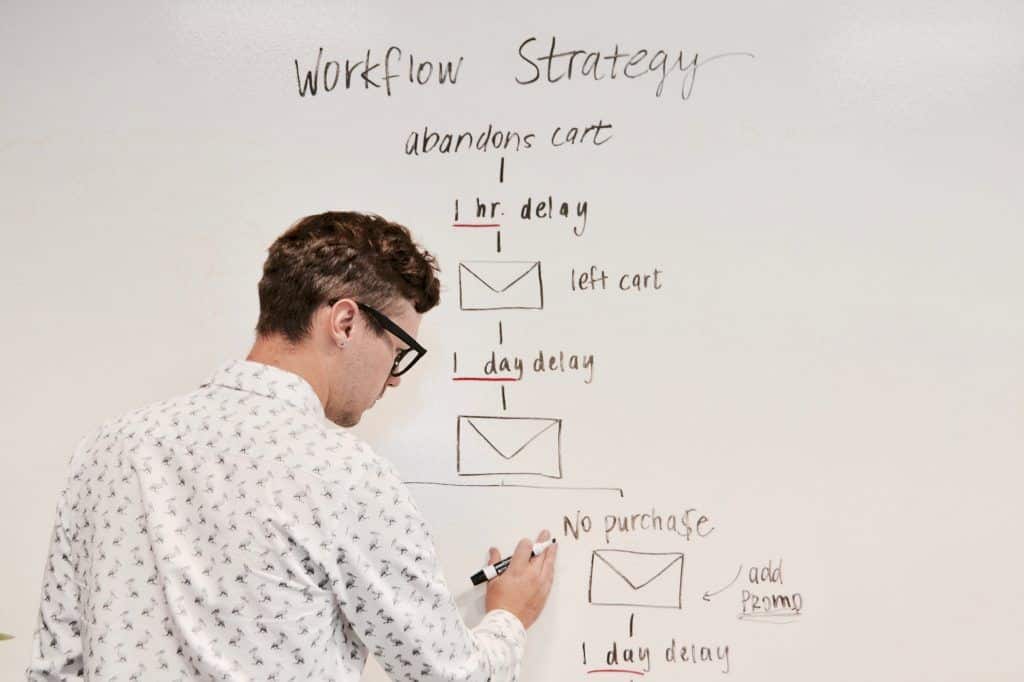
A visitor who signs up for your newsletter or downloads a white paper is often in the Consideration phase. Don't send a sales email but a sequence of 3 to 5 emails that answers common questions, refutes misconceptions and shares case studies. For example: mail 1 explains how your approach differs from competitors, mail 2 shows a case study with measurable results, mail 3 offers a free scan. Use marketing automation (such as AI-driven workflows) to segment by behavior: those who visited a pricing page get different content than those who read a blog about strategy. The conversion rate of such a sequence is often between 5 and 12%, depending on how well you segmented.

When Consideration focus is the right choice and when it is not

Consideration marketing pays off for companies with a buying process longer than 2 weeks and an average deal value above 2,000 euros. Think B2B services, custom software, expensive ecommerce products or consulting processes. For impulse purchases (ecommerce stores under 100 euros average order value) or very niche services with little competition, Consideration is less relevant: visitors go directly from Awareness to Decision. Also, if your brand is already dominant in your market (for example, as the only provider in a region) you don't need to invest as much in comparison content. Look at your Google Analytics: if visitors do an average of 1 session before conversion, focus on Awareness and Decision. At 3+ sessions, Consideration is crucial.

Want to apply this to your business? Monkey Vision helps SME entrepreneurs with web design, SEO and smart digital solutions. Schedule a no-obligation meeting and find out what's possible for you.

Schedule an introduction

Frequently Asked Questions

Yes, Consideration and evaluation phase refer to the same moment in the customer journey. Both terms describe the period during which a potential customer actively compares alternatives after defining his problem. The difference is mainly in the context: "Consideration" comes from digital marketing and content theory, while "evaluation phase" is more often used in sales processes and B2B pathways. In practice, you see marketers use Consideration to describe content strategies, and sales teams use Evaluation Phase to indicate a lead's position in the pipeline. Both perspectives are valuable: marketing focuses on serving this phase with content, sales on guiding the evaluation to a decision.

It depends on your average purchase amount and the complexity of your service. For products or services under 500 euros with few variables (think standard subscriptions or ecommerce store items), you can often offer a quote or order page directly. Visitors want to decide quickly and have little need for extensive comparison. Above 2,000 euros and with customization (such as a website design or automation project), Consideration content is essential. Visitors need to build trust and compare multiple providers. In your Analytics, look at the number of sessions for conversion: at an average of 3+ sessions, invest in case studies, comparison pages and white papers. At 1 session, focus on clear product pages and a quick checkout.

Start by identifying the questions potential customers ask before they choose. Analyze emails from prospects, note questions from intake interviews and review keywords in Google Search Console with terms like "difference," "comparison" or "best." Then create 3-5 pages or articles that answer these questions: a comparison between your approach and that of competitors, a checklist for making the right choice, or a case that shows how a client came to a decision. Publish this content on your website and optimize for the keywords you found. Promote via an email campaign to existing leads and deploy retargeting for website visitors. After 3 months, measure which content generated the most traffic and conversions and build on that.

The best approach depends on where you are now and how long your sales journey is. Do you already have visitors but they are not converting, or don't know what content will help them choose? Then schedule a free 30-minute marketing scan at Monkey Vision. We'll live analyze your current funnel, identify where prospects are dropping out and give you three concrete Consideration tactics that fit your service and target audience. You get an instant list of keywords, content ideas and an honest estimate of what it will yield. No sales pitch, just practical advice. Book your scan through Monkey Vision 's SEO services or contact us for a consultation on brand strategy and positioning.

About the author

Monkey Vision

Monkey Vision is a full-service digital agency at Nijmegen, specializing in web design, SEO, and AI automation for small and medium-sized businesses. The knowledge base has been compiled by our team of online strategists and is continuously updated based on current insights.

Publication date: 26-04-2026
Last update: 26-04-2026