Fine-tuning

Model fine-tuning, AI model refinement, Model adaptation, Transfer learning, Model training on own data
Fine-tuning is adapting an existing AI model with specific training data for your business situation. This gives you more accurate output that fits your jargon and work processes.

What is fine-tuning?

Fine-tuning is the process of further training an existing, pre-trained AI model with your own data to refine its behavior and output for your specific business situation. Instead of building a model from scratch, you take a base model such as GPT or a classification model and teach it your jargon, product catalog, customer queries or writing style. The result is a model that is more accurate, faster and more relevant to your specific questions and tasks.

How does fine-tuning work in practice?

You start with a basic AI model that already understands general language or patterns. Then you add a training set with examples from your company: customer questions with correct answers, product descriptions with correct categories or emails with the desired tone of voice. The model learns these examples and adapts its behavior accordingly. For an ecommerce store with technical products, for example, you train the model with your product specifications and frequently asked questions so that it can automatically give correct product advice. The quality of the output depends directly on the quality and quantity of your training data. Good fine-tuning usually requires between 50 and 500 examples, depending on the complexity of the task.

Why fine-tuning is relevant to SMEs now

Fine-tuning for years was only used by large tech companies with their own data science teams. Since 2023, platforms such as OpenAI and Google offer accessible interfaces that allow you to fine-tune a model without programming knowledge. For SMEs, this means you can deploy AI tools that truly understand how you work. An accounting firm can train a model on their reporting templates, a wholesaler on their order processes. The difference from standard AI tools is measurable: a fine-tuned model produces 30 to 70 percent fewer errors in domain-specific tasks than a generic model.

What fine-tuning delivers when combined with AI automation

Fine-tuning is often deployed as part of broader AI automation within your company. For example, an ecommerce store uses it to generate product descriptions that perfectly match their brand style and SEO requirements. A B2B service provider trains a model to write quotes based on previous successful proposals. In practice, Monkey Vision sees that fine-tuning pays off especially in repetitive tasks with a lot of nuance: customer service, content production, data classification or lead qualification. You invest time in collecting good training data, but then save hours of manual work every week. What's important is that you keep monitoring the model and adjusting it with new examples so that it doesn't become outdated or deviate from your business goals.
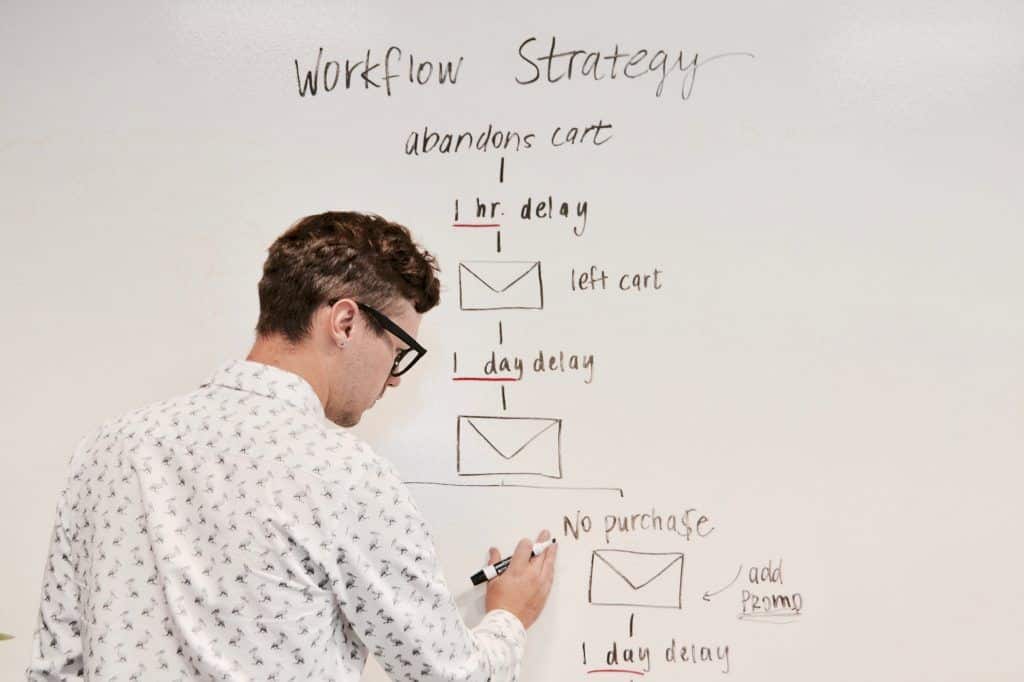

Applications of fine-tuning

Fine-tuning is deployed in practice as soon as a standard AI model is too generic or unpredictable for your business process. The added value lies in the combination of speed, consistency and domain knowledge. Below you can see four concrete situations in which SMEs successfully apply fine-tuning.

Custom customer service and email handling

A common application is automating customer queries via email or chat. A standard chatbot often gives generic answers that do not match your product catalog or workflow. By fine-tuning a model with previous customer questions and the answers your team gave, it learns the right tone of voice, product details and exceptions. For example, a technical wholesaler with 1,200 products trained a model with 300 previous customer questions. The result: 60 percent of questions are now answered automatically and correctly, without manual intervention. The remaining 40 percent are forwarded to an employee, but with a suggested answer that is immediately usable in 8 out of 10 cases. This saves an average of 12 hours per week.

Content production with consistent brand style

Companies that produce a lot of content such as product descriptions, blog articles or social media posts use fine-tuning to ensure consistent writing style. An interior design ecommerce store trained a model with 150 existing product descriptions that scored well on conversion and SEO. The model learns what features are important, how long a text should be and what tone suits the target audience. New products now receive draft text within 30 seconds that can be published immediately in 70 percent of cases. The advantage over standard AI tools is that the output does not sound generic, but is consistent with the existing tone of voice and brand identity. This increases recognition and trust among visitors.

Data classification and lead qualification

Fine-tuning also helps automatically categorize or prioritize incoming data. A consulting firm with 40 employees receives 200 contact requests weekly through various channels. Not every request is equally relevant or urgent. By training a model with previous leads and the outcome (assignment or not, budget, urgency), it can automatically score new requests for quality. The sales department immediately sees which leads have priority. This prevents valuable leads from being picked up late and saves time manually sifting through forms. A similar principle works when classifying invoices, support tickets or job applications. The model learns the patterns that are important to your business, not the generic patterns from a standard dataset.

When fine-tuning is the right choice and when it is not

Fine-tuning pays off if you have a repetitive task with a lot of nuance, can collect enough training data, and need to measurably improve the output. Consider at least 50 qualitative examples and a task that takes you at least 5 hours per week. Fine-tuning is not useful if your task is too broad or too variable, if you have too little data, or if a standard prompt instruction already works adequately. A one-time report or a creative brainstorm does not require fine-tuning. Also, if your data is sensitive and you have no control over where the model runs, fine-tuning is risky. Then consider an on-premise solution or another form of machine learning. In practice, we see that companies often fine-tune too quickly when a better prompt or a simple API integration is enough. Therefore, always start with testing on a small part of your process before investing in full fine-tuning.

Want to apply this to your business? Monkey Vision helps SME entrepreneurs with web design, SEO and smart digital solutions. Schedule a no-obligation meeting and find out what's possible for you.

Schedule an introduction

Frequently Asked Questions

No, they are two different techniques. In prompt engineering, you give a standard AI model detailed instructions in the query itself, without modifying the model. In fine-tuning, you modify the model permanently by training it with your own data. Prompt engineering is faster and cheaper, but less consistent. Fine-tuning takes more time and data, but produces more stable and accurate output. In practice, you often combine both: you fine-tune a model for your domain and then use smart prompts for specific queries. For one-off or changing tasks, prompt engineering suffices. For repetitive tasks with high quality requirements, fine-tuning is the better choice.

For almost all SMEs, fine-tuning is the wisest choice. Building your own model from scratch requires thousands to millions of training examples, a data science team and months of development time. Fine-tuning uses an existing base model and requires between 50 and 500 examples, depending on the task. You're live within days instead of months. You build your own model only if you have a completely unique task that no existing model can perform, or if you need full control over the model architecture for privacy or compliance reasons. In all other cases, fine-tuning offers a better return on investment and speed.

Start by identifying one repetitive task that is currently done manually and takes a lot of time: answering customer questions, writing text, categorizing data. Then collect at least 50 qualitative examples of input and desired output from your existing work processes. Think emails with answers, product descriptions or classified leads. Then test with a platform such as OpenAI or Google Vertex AI whether the model learns the task. Measure the difference in accuracy, speed and consistency compared to manual work or a standard AI tool. Only when the test results are conclusive do you scale up to your full process. Monkey Vision helps SMBs set up these testing processes and integrate fine-tuned models into existing systems through AI automation.

The biggest pitfall is poor training data. If your examples are inconsistent, outdated or too one-sided, the model learns wrong patterns. An ecommerce store that only uses product descriptions from one category will have a model that performs poorly on other categories. A second risk is overfitting: the model memorizes the training data rather than the underlying patterns, so it generalizes poorly to new situations. Companies also often underestimate maintenance costs. A fine-tuned model ages as your processes or products change. You need to retrain it regularly with new examples. Finally, fine-tuning does not solve unclear processes. If your team itself does not give consistent answers to customer questions, the model learns that inconsistency as well. Therefore, invest in clear work processes first before automating.

The best first step depends on which processes take the most time now and where errors or inconsistency are a problem. Do you have repetitive tasks that should always be done the same way, but are now done manually? Then schedule a free 30-minute automation scan at Monkey Vision. We'll walk through your work processes live and identify where fine-tuning or other AI automation is most beneficial. You will immediately receive three concrete areas for improvement, a realistic estimate of required training data and a step-by-step plan with time indication. No sales pitch, just practical advice you can pick up this month.

About the author

Monkey Vision

Monkey Vision is a full-service digital agency at Nijmegen, specializing in web design, SEO, and AI automation for small and medium-sized businesses. The knowledge base has been compiled by our team of online strategists and is continuously updated based on current insights.

Publication date: 26-04-2026
Last update: 26-04-2026