Conversion Copywriting

Conversion copywriting, Persuasive web texts, Conversion-oriented texts, Persuasive copywriting, Sales texts
Conversion copywriting is writing text that convinces readers to take a concrete action: buy, subscribe or contact. It works especially for ecommerce stores and landing pages.

What is Conversion Copywriting?

Conversion copywriting is writing web copy that elicits a specific, measurable action from the reader. It involves text that not only informs, but also convinces visitors to buy, sign up, request a quote or achieve some other concrete goal. Unlike general Web copy, conversion copywriting focuses on psychological triggers, clear value proposition and frictionless call-to-actions.

How conversion copywriting works in practice

Good conversion copy starts with understanding the target audience. You write from the need, doubt and expectation of the visitor. The text usually follows a recognizable pattern: attract attention with a powerful headline, name a problem that the reader recognizes, present the solution and then remove resistance with arguments, evidence or guarantees. The call-to-action is always central and clearly formulated. For an ecommerce store, this can be a product page with text that highlights benefits and removes objections. For a service provider, it can be a landing page offering a free scan or introductory consultation. The difference with plain text is in the focus on conversion: every sentence has a purpose.

Why conversion copywriting came about and why it matters now

Conversion copywriting stems from direct response marketing, a discipline that has revolved around measurable results for decades. With the rise of ecommerce stores and online services, it became increasingly important to not only inform but also activate visitors. Whereas traditional texts primarily build brand awareness, online text often needs to convince immediately. The average visitor scans a page in a few seconds and then decides whether to stay or leave. In that context, every sentence is an opportunity or a missed opportunity. Therefore, for SMEs with limited marketing budgets, conversion copywriting is often more effective than broad campaigns: you optimize what you already have instead of buying more traffic.

What conversion copywriting brings to SMEs

With strong conversion copy you get more return on existing traffic. An ecommerce store that attracts 2,000 visitors monthly but converts only 1% can grow to 2% or 3% with better product copy and a clear checkout flow without additional advertising costs. For a B2B service provider, a well-written landing page can make the difference between 5 and 15 inquiries per month. Conversion copywriting works best when combined with thoughtful web design and a clear user experience. The text drives, the design supports. At Monkey Vision , we often see companies start with a beautiful website but forget that the text has to convince the visitor. An investment in professional web copy often delivers returns faster than a new campaign.

Applications of Conversion Copywriting

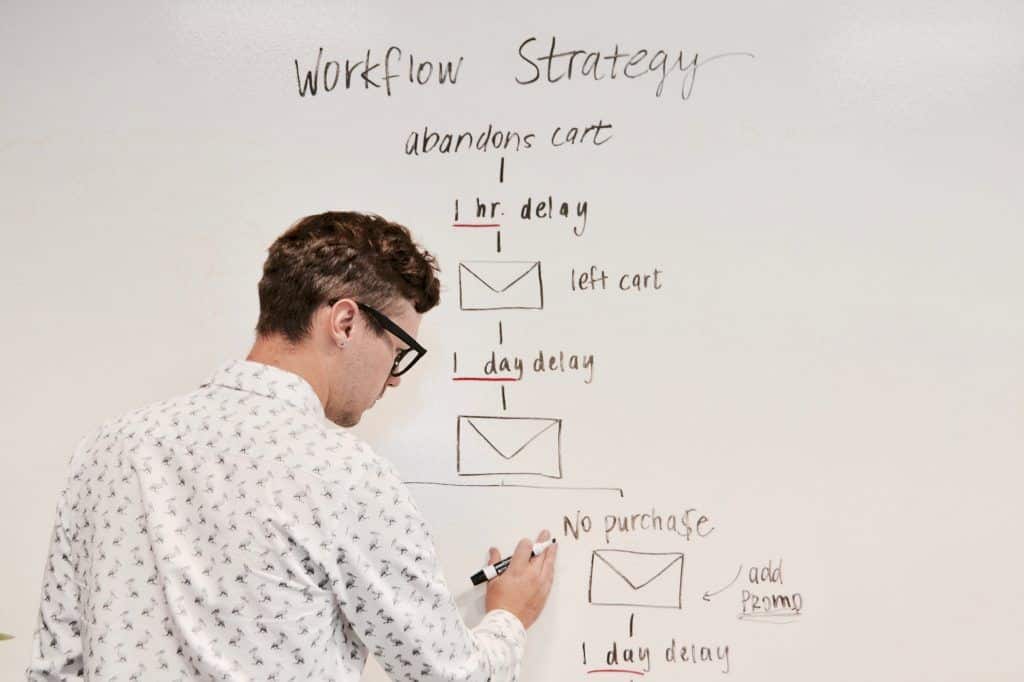
Conversion copywriting is broadly applicable, but works most strongly in places where visitors need to make a decision. Think product pages, campaign landing pages, checkout flows and email sequences. Here are four specific situations where conversion copy makes a difference.

Product pages in ecommerce stores with similar providers

If you have an ecommerce store with products that are also available elsewhere, the text is often decisive. A visitor compares price, delivery time and trust. Conversion copy emphasizes unique benefits, reassurance and clarity. For example: an ecommerce store selling the same parasol as ten competitors can make all the difference with product descriptions that address wind resistance, warranty and ease of installation. Add a clear call-to-action such as "Tomorrow at home" and you increase the likelihood of purchase. The text should answer the question the visitor still has before he breaks off. In practice, we see that ecommerce stores with generic manufacturer texts convert 30 to 50% less than stores with custom copy per product.

Landing pages for Google Ads or social media campaigns

A landing page has one goal: to get the visitor to do what the ad promised. Conversion copywriting ensures that the message from the ad carries through into the page. If a visitor clicks on an ad for "Free SEO scan," the landing page should directly confirm what he is getting, why it is valuable and how to request it. No distractions, no general text about the company. Case in point: a Nijmegen consulting firm was running ads for a free intake consultation. The old landing page had general text about services and a form at the bottom. Conversion: 4%. After rewriting with a focus on the value of the call, a short bullet list of what the client gets out of it, and a visible form at the top, conversion increased to 11%. The text did the work, not the design.

Email series for lead nurturing and customer retention

Conversion copywriting also works beyond the website. An email series after a sign-up, purchase or quote request can activate inactive leads or lead customers to a second purchase. The text should feel personal, offer a clear benefit and provide a gentle push. For example: an ecommerce store in sports nutrition sends a series after a first purchase with tips, recipes and a discount code for a second order. The tone is helpful, not sales-oriented. Yet each email contains a clear call-to-action. With SMBs, we often see emails that are too general or want too much at once. Conversion copy keeps the focus sharp: one message, one action per email. That increases click-through rate and ultimately sales.

When conversion copywriting is the right choice and when it is not

Conversion copywriting makes sense if you want to trigger a clear action and the visitor is already warm or interested. It works less well if your brand is still unknown or if you mainly want to build brand awareness. In that case, storytelling or brand strategy is more important. Even with complex B2B services with long sales processes, you have to be careful of too direct sales language. Conversion copy then works better in the later phases, for example on a quote request page, not on the homepage. Choose conversion copywriting if you already have traffic but too little conversion, if you are running campaigns with a clear goal or if your ecommerce store competes at the product level. Don't choose it if you need to work on brand awareness first or if your target audience doesn't yet know they have a problem.

Want to apply this to your business? Monkey Vision helps SME entrepreneurs with web design, SEO and smart digital solutions. Schedule a no-obligation meeting and find out what's possible for you.

Schedule an introduction

Frequently Asked Questions

No, they are two different disciplines with different purposes. SEO copy is written to rank well in search engines and attract visitors to your site. Conversion copywriting focuses on what happens next: convincing the visitor to take action. In practice, they complement each other. A good product page combines keywords for findability with persuasive text for conversion. Many SMB companies focus only on SEO and forget that a high position in Google won't achieve anything if the visitor leaves right away. The best approach is an SEO strategy that generates traffic and conversion copy that converts that traffic into customers.

Both are necessary, but the order matters. A beautiful website without strong text converts poorly. An ugly website with good text converts better than you think, but not optimally. In practice, we often see SME clients investing in design and writing the text themselves or copying from competitors. That's a missed opportunity. The text guides the visitor, the design supports. So start with clear copy and build the design around it. If you have to choose due to budget constraints: invest in text first. A simple landing page with strong copy and a clear form often converts better than a visually impressive page with vague text. Ideal, of course, is the combination: conversion design and conversion copy reinforce each other.

Start with your best-selling products. Rewrite product pages with focus on benefits rather than features. Highlight objections and address them with arguments, assurances or evidence such as reviews. Make sure the call-to-action is clear and repeat it in multiple places on the page. Then test the effect: measure conversion before and after the change. Many ecommerce stores use manufacturer texts or short bullet points. That doesn't work if you want to stand out. Take the time to describe per product why a customer would buy it, what problem it solves and why ordering from you is the best choice. If you need help with that, a professional copywriter or a scan of your current texts can go a long way.

The best first step depends on where you are now. Do you already have traffic but little conversion? Then it pays to have your most important landing pages or product pages rewritten. Want to know which pages are most promising? Schedule a free 30-minute conversion scan at Monkey Vision. We walk through your site live, analyze where visitors drop out and give you three concrete improvements for your texts. You get an honest assessment of the potential and know immediately if investing in conversion copy makes sense for your situation. No sales talk, but practical advice from years of experience with SME ecommerce stores and service providers.

About the author

Monkey Vision

Monkey Vision is a full-service digital agency at Nijmegen, specializing in web design, SEO, and AI automation for small and medium-sized businesses. The knowledge base has been compiled by our team of online strategists and is continuously updated based on current insights.

Publication date: 26-04-2026
Last update: 26-04-2026