Broken Link Building

Broken link building, Dead link building, Dead link building, Broken link strategy, Link reclamation
Broken link building is an SEO link strategy where you identify broken links on external sites and then suggest to the owner to link your relevant content as a replacement. This produces high-quality backlinks for your website.

What is Broken Link Building?

Broken link building is an off-page SEO strategy where you track down broken external links on relevant websites within your industry, and then approach the site owner with a proposal to use your working content as a replacement link target. The method combines technical sleuthing with personal outreach and often produces high-quality backlinks because you solve a concrete problem for the linking site owner. For SMEs, this is an effective way to get authority links without directly competing with established parties.

How broken link building works in practice

The strategy consists of four steps. First, identify websites in your field that publish relevant content, such as industry organizations, trade journals, or knowledge bases. Next, scan these sites for broken outbound links using tools like Screaming Frog, Ahrefs, or the free Check My Links extension for Chrome. As soon as you find a 404 page linked to by multiple sites, use the Wayback Machine to analyze what the original content was. Finally, create or identify similar content on your own site and reach out to the site owners with a personalized message reporting the broken link and suggesting your alternative. The power lies in the mutual benefit: you solve a problem, and the other party improves the user experience.

Why broken link building is more effective than cold outreach

Traditional link building often asks for a link without direct consideration, which most site owners ignore. Broken link building reverses the situation. You offer a solution to an existing problem that the owner often doesn't even know about. A broken link damages the user experience and wastes the anchor text value the link once had. By reporting this, you prove your expertise and show respect for the quality of their site. In practice, the acceptance rate is between 15 and 30 percent, significantly higher than generic link requests. Moreover, the links often come from pages with existing authority because older content has had more time to accumulate backlinks. This makes broken link building particularly valuable within a broader SEO strategy.

What broken link building brings to Dutch SMEs

For an SME with a limited marketing budget, broken link building offers a cost-effective route to high-quality backlinks. Instead of paying for ads or sponsored content, you invest time in research and personal communication. For example, an accounting firm can find broken links on websites of industry organizations such as the NBA or SRA, and offer its own white papers or calculation tool pages as replacements. An ecommerce store selling sustainable products can replace broken product links on lifestyle blogs with its own category pages. The links you acquire this way are contextually relevant, come from sites with topical authority, and have a natural link profile because they fit organically into existing content. If you want to approach this systematically as part of a broader off-page SEO strategy, a structured link-building approach will help you achieve scalable results without losing authenticity.
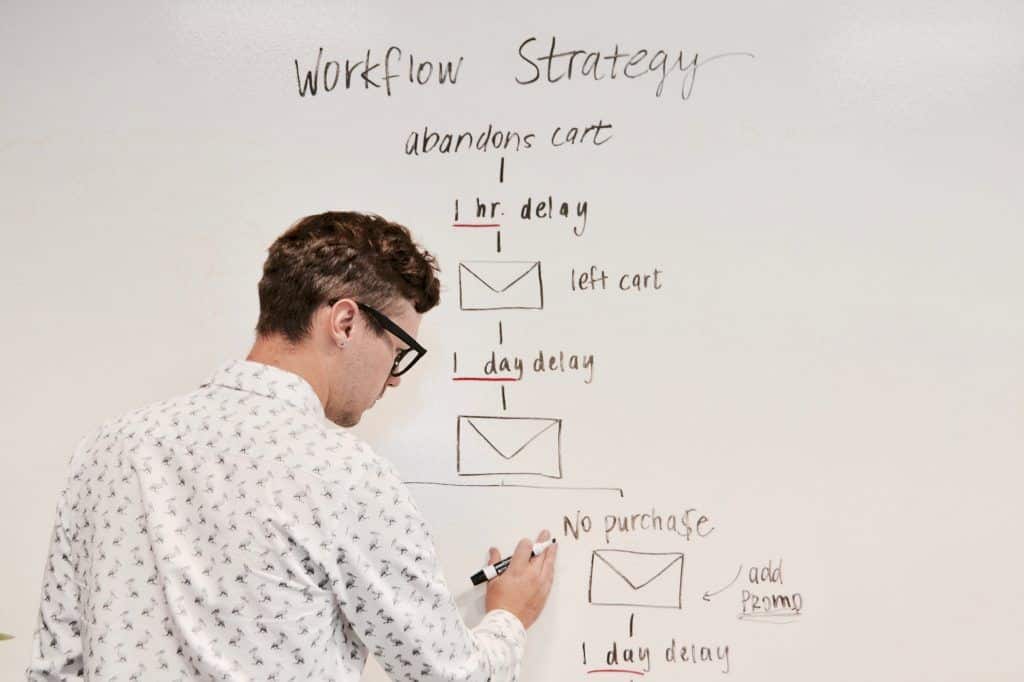

Applications of Broken Link Building

Broken link building fits different scenarios, depending on your content assets and competitive position. The strategy works best when you already have quality content relevant to your industry, and when you are willing to invest time in manual research and personal outreach. Below are four concrete applications that have proven effective in Dutch SME practice.

Restore industry resource pages and link lists

Many industry associations, knowledge platforms and municipal websites maintain lists of useful resources for their constituents. These pages often collect dozens of external links, but are rarely actively maintained. Defective links occur when companies shut down, domains expire or pages are moved. By scanning these resource pages, you'll find opportunities to suggest your own guides, tools or knowledge base articles. An example: a mortgage broker finds a broken link on a municipality's consumer page and proposes their own startup guide. The municipality wins because their page is complete again; the advisor gets a link from an authoritative .nl domain name. These links often have high trust because government and industry bodies are strict about who they link to.

Replace competitors who quit as link source

When a competitor quits, lets the domain expire or is acquired by a domain parker, existing backlinks to their site often remain active for years. With tools like Ahrefs or Majestic, you can analyze the backlink profile of such an expired domain and find all the sites that still link to the old pages. Then you approach these sites with the message that the link no longer works and offer your similar service or content. This works especially well in niche sectors: a local catering service replacing a defunct competitor on an event venue's vendor list, or a graphic designer replacing a nonexistent portfolio link on a design blog. Conversion is high because the linking party once already saw value in this type of service provider.

Update outdated statistics and research reports

Many blogs and news sites link to research reports, white papers or statistics from knowledge institutions or companies. When such a source goes offline or becomes obsolete, an opportunity arises for those with up-to-date data. An SME that conducts an annual industry survey can approach sites that still link to a defunct CBS page or a no-longer-existing trade journal survey. Not only are you providing a working link, but also more recent information. This increases the quality of the article containing the link, which increases the probability of acceptance. Case in point: a recruitment agency that publishes an annual salary survey replaces faulty links to old labor market figures on HR blogs. The resulting backlinks are contextually strong and often attract direct traffic from interested readers as well.

When broken link building is the right choice and when it is not

Broken link building pays off when you already have content similar to what the broken link once offered, or when you are willing to create that content. It works less well if you don't have time for manual research and personal emails, as automated mass requests are almost always ignored. Also, the strategy is less suitable for highly competitive keywords where all parties have long found the same faulty links. In those cases, you are better off betting on content marketing and link-worthy assets that have organic appeal. Use broken link building as a supplement, not the only link strategy, and focus on niche sites within your field where competition is lower and relevance higher.

Want to apply this to your business? Monkey Vision helps SME entrepreneurs with web design, SEO and smart digital solutions. Schedule a no-obligation meeting and find out what's possible for you.

Schedule an introduction

Frequently Asked Questions

No, broken link building is the opposite of spam. In spam link building, you place mass irrelevant links on forums, comments or low-quality directories with no value to the recipient. Broken link building, on the other hand, solves a concrete problem: You report a broken link that harms the user experience and offer a relevant replacement. The site owner wins because their page is complete again; you win a contextual backlink. The strategy requires manual research, personal communication and real content relevance. Google appreciates this because the link organically fits into existing content and reinforces a natural link profile. Provided you target relevant sites within your industry and don't send generic mass requests, broken link building is a legitimate and effective off-page SEO technique that meets search engine guidelines.

It depends on your available time and technical knowledge. Doing it yourself is feasible if you are familiar with SEO tools such as Ahrefs, Screaming Frog or Check My Links, and if you are skilled in personal outreach emails. The investment is mostly time: an average of 3 to 5 hours per 10 potential links for research, analysis and communication. Outsourcing pays off when you can put those hours to better use in your core business, or when you want to achieve scale with multiple campaigns simultaneously. A specialized agency has existing toolsets, experience in what approach works and often higher acceptance rates due to proven email templates. Just be sure to choose a party that reports transparently on which sites they approach and that works manually, not automated mass solicitations. When in doubt: start with a pilot of 20 sites yourself to experience how much work it is, and then decide if professional link-building support is cost-effective.

Start by identifying 5 to 10 authoritative websites in your field: industry organizations, trade journals, knowledge platforms or large blogs that maintain resource pages. Install the free Chrome extension Check My Links and scan their pages for faulty outbound links. Make note of the URLs that give a 404 status and use archive.org to see what the original content was. Then shortlist defective links that you have similar or better content for. Write a personal email: name the specific page, report the broken link, briefly explain why your content is a good replacement, and courteously close without pressure. Keep track of which sites you approached and follow up after a week for non-responders. Measure the results: how many links did you obtain per 10 requests? Use that data to refine your approach. Want to scale this up systematically with professional tooling and proven templates? Schedule a free 30-minute SEO scan where we analyze your current backlink profile and identify three concrete broken link opportunities you can pick up this month.

About the author

Monkey Vision

Monkey Vision is a full-service digital agency at Nijmegen, specializing in web design, SEO, and AI automation for small and medium-sized businesses. The knowledge base has been compiled by our team of online strategists and is continuously updated based on current insights.

Publication date: 26-04-2026
Last update: 26-04-2026