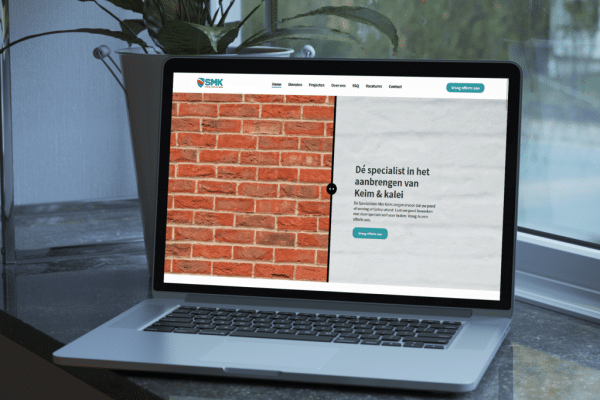
Niche

Market Niche, Niche Market, Target Audience Segment, Specialization, Submarket
A niche is a defined market segment in which a company specializes, with specific customer needs and little competition. It helps you position yourself as unique.

What is a niche?

A niche is a specific, well-defined segment of a market in which your company specializes. You focus on a clearly defined target audience with unique needs, problems, or desires that are not adequately served by the broader market. By choosing a niche, you build expertise in a specific field and become the obvious choice for customers within that segment. Instead of competing on price in an overcrowded market, you create a competitive edge through in-depth knowledge and custom services.

How niche positioning works in practice

You define a niche by combining three elements: a specific target audience, a well-defined problem, and a distinctive approach. For example, a web design agency might choose the niche “websites for organic nutrition coaches” instead of “websites for entrepreneurs.” That definition makes your proposition immediately recognizable. Your marketing message becomes sharper because you know exactly which pain points you’re solving. Your content, case studies, and services align seamlessly with the expectations of that specific group. This makes acquisition easier: potential clients recognize themselves in your story and see you as a specialist. The niche doesn’t have to be small, but it does need to be specific enough to set you apart from generic providers.

Why a niche strategy is relevant for small and medium-sized businesses

The decision to focus on a niche arose from the need for smaller companies to compete with larger players without unlimited budgets. Major players often take a broad approach and try to serve everyone. As an SMB, you can’t sustain that: your marketing budget is more limited, your team is smaller, and your brand awareness is lower. By focusing on a niche, you build authority more quickly. You don’t need to be visible everywhere, just where your ideal customer is searching. This makes search engine optimization more effective: you compete on specific search terms with less competition. In practice, we see with our SMB clients that a clear niche leads to higher conversion rates, shorter sales cycles, and better customer relationships.

What this niche offers your business

With a clear niche, you’ll build a reputation as an expert more quickly. Clients are willing to pay more for specialized knowledge than for general services. Your content marketing becomes more targeted: every article, every case study, and every social media post directly addresses the needs of your target audience. Referrals increase because existing clients know exactly who you’re a good fit for. Your brand strategy also becomes clearer: your visual identity, tone of voice, and positioning can fully align with the culture and expectations of your niche. According to research by Statistics Netherlands (CBS), specialized small and medium-sized enterprises (SMEs) grow faster on average than generalists, especially in saturated markets. Focusing on a niche makes your business more agile and less dependent on price competition.


Applications of a niche

Adopting a niche means consciously choosing what you do and don’t focus on. In practice, this is reflected in your services, marketing, sales, and even your team composition. Below are four concrete ways in which small and medium-sized businesses use a niche to achieve growth and profitability.

Niche as a foundation for content marketing and SEO

If you have a clear niche, you can create targeted content that aligns with your ideal customer’s search intent. A recruitment agency specializing in technical staff for the manufacturing industry doesn’t write about “job application tips,” but rather about “how to find the best employer in Brabant as a mechanical engineer.” That specificity makes you discoverable by the right people. You’ll compete on long-tail keywords with less competition and a higher conversion rate. Link building also becomes easier: industry partners, suppliers, and trade publications within your niche are more likely to link to your content because you’ve established authority. In an SEO strategy, focusing on a niche leads to faster results because you don’t have to optimize for such a broad range of topics.

Niche for product development and customized services

By focusing on a specific target audience, you can develop products or services that perfectly align with their needs. An ecommerce store specializing in running shoes for trail runners can fully tailor its product range, filters, advice, and content to that niche. This increases conversion rates and reduces return rates. A design firm that focuses on hospitality interiors builds up knowledge about materials, permits, and operational logic that a generalist lacks. That expertise translates into better solutions, faster turnaround times, and satisfied customers who refer others. In an ecommerce store project, a niche ensures that you make choices that truly add value rather than simply copying general best practices.

Niche as a selling point in business development and proposals

In a sales conversation, a niche gives you credibility. If you mention that you’ve conducted 40 websites for physical therapists, a potential client in that industry immediately knows that you understand their challenges. You’ll have less to explain and can respond more quickly to specific needs such as online appointment scheduling, GDPR-compliant patient data, or integration with health insurers. Your proposals will be more targeted, and your win rate will increase. Your sales process also becomes shorter: clients perceive less risk because you have proven experience in their field. At Monkey Vision , we’ve noticed that clients are more likely to say “yes” when they see case studies from their own industry, even if the technical solution is similar to those in other sectors.

When a niche is the right choice—and when it isn’t

A niche works best if you’ve already built up some experience and know which clients energize you and are profitable. For aspiring entrepreneurs, a niche that’s too narrow can be risky: your market will become too small to make a living from. In that case, start broader and gradually narrow your focus based on where you’re successful. A niche is also less suitable if you’re dependent on a highly volatile market or if your target audience is too small to achieve sustainable growth. Don’t choose a niche based on a trend that will be over in two years. Do choose a niche, however, if you notice that a specific type of customer keeps coming back, if your competition is broad and undifferentiated, or if you see enough volume within a defined segment to remain profitable.

Want to apply this to your business? Monkey Vision helps SME entrepreneurs with web design, SEO and smart digital solutions. Schedule a no-obligation meeting and find out what's possible for you.

Schedule an introduction

Frequently Asked Questions

No, a niche is more specific than a target audience. A target audience describes who your customers are, for example, “SME entrepreneurs in the business services sector.” A niche combines a target audience, a problem, and a solution into a sharp positioning, such as “automation of quote processes for consulting firms with 5 to 20 employees.” Your target audience can be broad, but your niche defines where you truly excel. In practice, you’ll see that companies with a clear niche are recognized more quickly as specialists, while a broad target audience often leads to generic messaging. A niche makes your brand positioning sharper and your marketing more effective because you know exactly whose problem you’re solving.

That depends on your stage, resources, and ambitions. A broad market offers more volume but also more competition and lower margins. A niche offers less volume but higher conversion rates, better customer relationships, and greater differentiation. If you’re just starting out and don’t have a track record yet, start broad and observe where you’re successful. Once you see patterns, you can narrow your focus. Do you already have an existing customer base and notice that a certain type of customer is the best fit for you? Then a niche is the logical next step. Note: a niche doesn’t have to be small. “Websites for healthcare professionals” is narrower than “websites for everyone,” but it’s still a market of thousands of potential customers in the United States. Choose a niche that’s large enough to make a living from, but specific enough to set you apart.

The most common mistake is choosing a niche based on enthusiasm rather than market validation. You love yoga, so you target yoga instructors, but forget to check whether that group has sufficient purchasing power and need. A second mistake is narrowing your focus too much: “websites for left-handed hairdressers in Gelderland” sounds unique but is too niche to be profitable. A third mistake is not daring to make a choice out of fear of losing customers. That leads to vague positioning where you try to be “everything to everyone.” Validate your niche by looking at existing demand, competition, and whether you’re passionate about the subject. Test your niche by committing fully to it for three months before you adjust your entire brand identity to fit it.

The best first step is to perform an analysis of which clients already provide you with the most value and energy. Do you see patterns in industry, company size, or type of challenge? That’s your starting point. Next, test whether that niche is large enough by researching search volume, industry size, and competition. Want to know how to translate a niche into a clear brand strategy, website, and content plan? Then schedule a free 45-minute strategy session with Monkey Vision. Together, we’ll conduct an analysis of your current position, identify promising niches, and provide you with a concrete step-by-step plan to sharpen your positioning. No sales pitch—just practical advice based on our experience with dozens of small and medium-sized businesses. See how we approach brand development.

About the author

Monkey Vision

Monkey Vision is a full-service digital agency at Nijmegen, specializing in web design, SEO, and AI automation for small and medium-sized businesses. The knowledge base has been compiled by our team of online strategists and is continuously updated based on current insights.

Publication date: June 12, 2026
Last updated: June 12, 2026