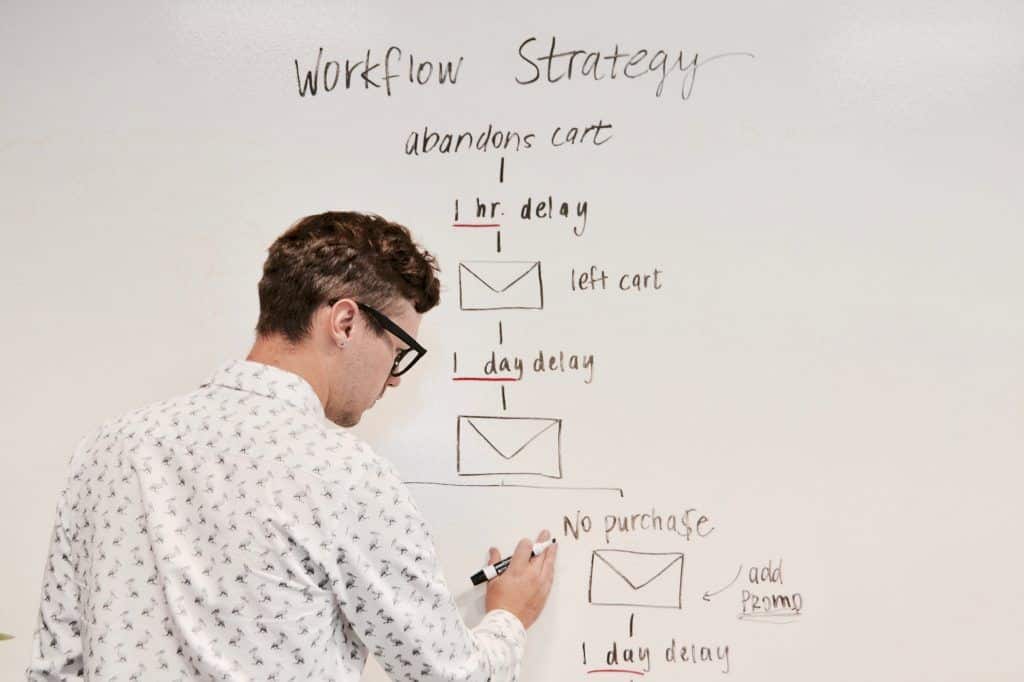
Data Enrichment

Data enrichment, Data enrichment, Data replenishment, Customer data enrichment, CRM enrichment
Data enrichment enriches existing customer or product data with external information to make it more complete and useful. This way you get better segmentation and conversion.

What is Data Enrichment?

Data enrichment is the process of supplementing existing business data with external information to make it more complete, accurate and useful. For example, you take a list of e-mail addresses and enrich it with company name, job title, industry and turnover class. The result is a dataset that allows you to segment, personalize and communicate in a more targeted way. For SMEs with a CRM, email list or ecommerce store customer base, this makes the difference between generic communications and targeted campaigns that perform measurably better.

How data enrichment works in practice

The process starts with a base file: a list of email addresses, phone numbers, company names or domain names. Via an API link or manual upload, you send this data to an enrichment service such as Clearbit, ZoomInfo or a local Dutch provider. For each record, the service looks up additional information from public sources, company databases and social media. Within seconds, you get back additional fields per contact person or organization: job title, number of employees, industry, technology stack, social media profiles and sometimes even purchase intent signals. You import the enriched data back into your CRM or marketing automation tool and can immediately create segments based on the new attributes.

Why data enrichment came about and why it matters now

Companies used to complete customer data manually via telephone interviews or questionnaires. This was time-consuming and produced incomplete data sets. With the emergence of public company databases, LinkedIn profiles and company websites, it became possible to retrieve this information automatically. Data enrichment platforms combine these sources and make enrichment scalable. For SMBs, this is now relevant because personalization is no longer optional: recipients expect relevant content. A generic newsletter to 5,000 contacts performs worse than five targeted campaigns to 1,000 contacts each with a message that matches their industry, company size or stage in the customer journey.

What data enrichment brings to SMEs

With enriched data, you can use your marketing budget more effectively. For example, you filter leads by company size and only send SMEs with 10 to 50 employees a quote for your service. Or you segment ecommerce store customers by zip code area and industry and adjust your assortment and pricing accordingly. In practice, we see in SEO projects and marketing automation projects that enriched data increases the open rate of email campaigns by 20 to 40 percent and accelerates the conversion from lead to customer. You save time because you no longer have to manually dig through LinkedIn profiles and you avoid waste through irrelevant communications to the wrong target groups.


Applications of Data Enrichment

Data enrichment is not an end in itself, but a means to make existing processes smarter. Below are four concrete situations in which SME companies use enriched data to achieve better results. Each application solves a different problem and requires its own approach.

Lead scoring and qualification in B2B sales

When you capture leads through a contact form or whitepaper download, you often only know name and email address. With data enrichment, you add company size, industry, job title and technology stack. Your sales team instantly sees which leads fit your ideal customer profile and which don't. A lead from a sole proprietor gets a different follow-up than a lead from a company with 40 employees. You can automatically assign a score in your CRM based on the enriched attributes: an IT manager at a manufacturing company with 25 employees scores higher than an intern at a sole proprietorship. This allows your team to spend time on the leads with the highest chance of conversion and avoid waste on cold contacts. In practice, we see B2B service providers increase their conversion rates by 15 to 30 percent by performing this qualification upfront.

Email campaign personalization and marketing automation

A generic newsletter to your entire list yields low open rates and even lower click-through rates. With enriched data, segment your list by industry, company size, function or region and send a customized message per segment. A web design agency sends SME retailers a case about ecommerce store optimization and B2B service providers a case about lead generation. You personalize not only the content, but also the tone of voice and the offer. In marketing automation workflows, you can set triggers based on enriched fields: if a contact is promoted to manager, you send a congratulatory message with a relevant white paper. This approach increases relevance and strengthens the relationship. Companies with enriched data measure on average 25 to 50 percent higher engagement in their campaigns compared to unsegmented expressions.

Account-based marketing and target group selection

With account-based marketing, you target a select list of ideal customers rather than mass. Data enrichment helps you build that list and keep it current. You upload a list of company names or domain names and enrich it with revenue, number of employees, locations, technology stack and recent news stories. That way you identify which accounts are in a growth phase right now, which just opened a new branch or which are using technology that aligns with your solution. You can then deploy targeted LinkedIn campaigns, direct mail or personal outreach. This approach works especially well for B2B companies with a limited number of potential customers and a high deal value. Instead of scattering broadly, invest deeply in the right accounts.

When data enrichment is the right choice and when it is not

Data enrichment makes sense if you have an existing customer base with at least 500 contacts and you find that segmentation or personalization is now too coarse. It pays off especially in B2B, where company characteristics are highly predictive of purchase behavior. For B2C ecommerce stores with consumer data, enrichment is more limited: you can add zip code area, household income or family composition, but quality and privacy sensitivity require extra care. Data enrichment is not useful if your base data is of poor quality, for example with lots of duplicate or outdated records. Fix that first. Also not useful: enrichment without a clear purpose. Only collect data that you actually use in segmentation, scoring or personalization. More data without application only increases your AVG risk and maintenance burden.

Want to apply this to your business? Monkey Vision helps SME entrepreneurs with web design, SEO and smart digital solutions. Schedule a no-obligation meeting and find out what's possible for you.

Schedule an introduction

Frequently Asked Questions

No, data enrichment and data scraping are two different processes. Data scraping extracts information from Web sites without the owner's permission, often in violation of terms of use and sometimes illegally. Data enrichment uses authorized data sources such as company databases, LinkedIn APIs or public records to supplement existing data. A reliable enrichment provider is licensed and compliant with AVG regulations. Scraping often produces unreliable, incomplete or outdated data. Enrichment services continuously validate and update their sources. For SMBs, the difference is crucial: with scraping, you run legal and reputational risks; with enrichment, you build a solid, compliant database.

Manual supplementation works for small lists up to 100 contacts or for very specific information that is not publicly available. You call or email contacts and ask for function, industry or interest. This gives the most current and accurate data, but is time-consuming and does not scale. Automated enrichment through a platform or API is more efficient starting at 500 contacts. You enrich thousands of records in minutes with 70 to 90 percent accuracy, depending on the source. The best approach combines both: automatic enrichment for basic fields such as company size and industry, manual completion for strategic accounts or missing fields. Choose automation when speed and scale count, choose manual when precision and relationship are more important than volume.

The biggest pitfall is relying on outdated or inaccurate data. Enrichment services pull information from databases that are sometimes months old. Someone has since changed jobs, a company has been acquired or a branch has closed. Therefore, never send automated campaigns without validation. A second pitfall is over-enrichment: you collect dozens of fields that you never use. That increases your storage costs, AVG risk and maintenance burden. Only collect data that you actively use in segmentation or personalization. A third risk is vendor lock-in: some platforms hold enriched data in their own environment. Make sure you can export the data to your own CRM. Also check that the provider is AVG-compliant and offers a processing agreement, especially for personal data of EU citizens.

The best first step depends on your current situation and goals. Do you have a CRM with more than 500 contacts but notice that segmentation is too coarse? Then start with a free scan of your current database. Monkey Vision helps SMEs set up marketing automation and data integrations. In a 30-minute session, we analyze your file, identify which fields are missing and provide a concrete roadmap for enrichment, segmentation and personalization. You get instant insight into which data sources fit your industry and how to be AVG compliant. No sales pitch, just an honest estimate of ROI and turnaround time.

About the author

Monkey Vision

Monkey Vision is a full-service digital agency at Nijmegen, specializing in web design, SEO, and AI automation for small and medium-sized businesses. The knowledge base has been compiled by our team of online strategists and is continuously updated based on current insights.

Publication date: 26-04-2026
Last update: 26-04-2026