Client Experience

Customerexperience, CX, Customer Perception, Customer Experience Management, Customer Journey
Customer experience is the total experience a customer has during all points of contact with your company. It determines whether customers return and recommend you to others.

What is customer experience?

Customer experience is the sum of all the emotions, thoughts, and actions a customer experiences throughout their entire interaction with your company. It begins the moment someone first hears about you and continues long after the purchase. Every touchpoint counts: from your website and social media to the way calls are answered, how quickly you respond to a question, and how smoothly the delivery process goes. For small and medium-sized businesses, customer experience is a strategic lever that directly influences customer loyalty, word-of-mouth, and repeat purchases.

How does the client experience work in practice?

Customer experience is the sum of both functional and emotional factors. Functional means: does it work, is it easy to use, do I get what I came for? Emotional is about feeling: am I understood, do I trust this company, do I feel valued? An ecommerce store may function perfectly from a technical standpoint, but if customer service is unreachable and the return process is unclear, the customer experience will remain subpar. Conversely, a slightly slower website can be forgiven if you assist customers personally and proactively. In practice, we see with small and medium-sized business (SMB) clients that even small improvements in accessibility, clarity, and speed make a big difference in customer satisfaction. Customer experience isn’t a one-off project, but an ongoing cycle of measuring, improving, and measuring again.

Why Customer Experience Is Now Central

Customer experience is not a new concept, but its urgency has increased significantly in recent years. Customers don’t just compare you to direct competitors, but to the best experience they’ve ever had with any company. An ecommerce store with 50 products is subconsciously measured against Coolblue’s checkout experience. A local service provider is compared to the response time of an online platform. In addition, customers share their experiences more quickly and widely through reviews, Google, social media, and WhatsApp groups. A single bad experience can reach dozens of potential customers. At the same time, a good customer experience is increasingly the reason why customers choose a local business over a major player.

What customer experience delivers for your business

A well-thought-out customer experience leads to higher customer satisfaction, more repeat purchases, and better word-of-mouth advertising. Customers who have a good experience stay loyal longer and spend more on average. They are less price-sensitive and more willing to purchase new products or services from you. Moreover, they act as ambassadors: they recommend you to colleagues, family, and friends. For small and medium-sized businesses, this is especially valuable, because personal recommendations carry more weight than advertisements. A strong customer experience requires clear processes, good communication, and a user-friendly website. That’s why, in Monkey Vision web design and SEO projects, we always look at the entire customer journey—not just the technical aspects or search engine visibility.

Applications of customer experience

Customer experience is not an abstract concept, but a practical lens through which you can assess and improve every aspect of your business. In practice, you see the power of customer experience reflected in specific situations where customers interact with your brand, product, or service. Below are three concrete applications that have the greatest impact for Dutch small and medium-sized businesses.

Optimizing the online customer journey

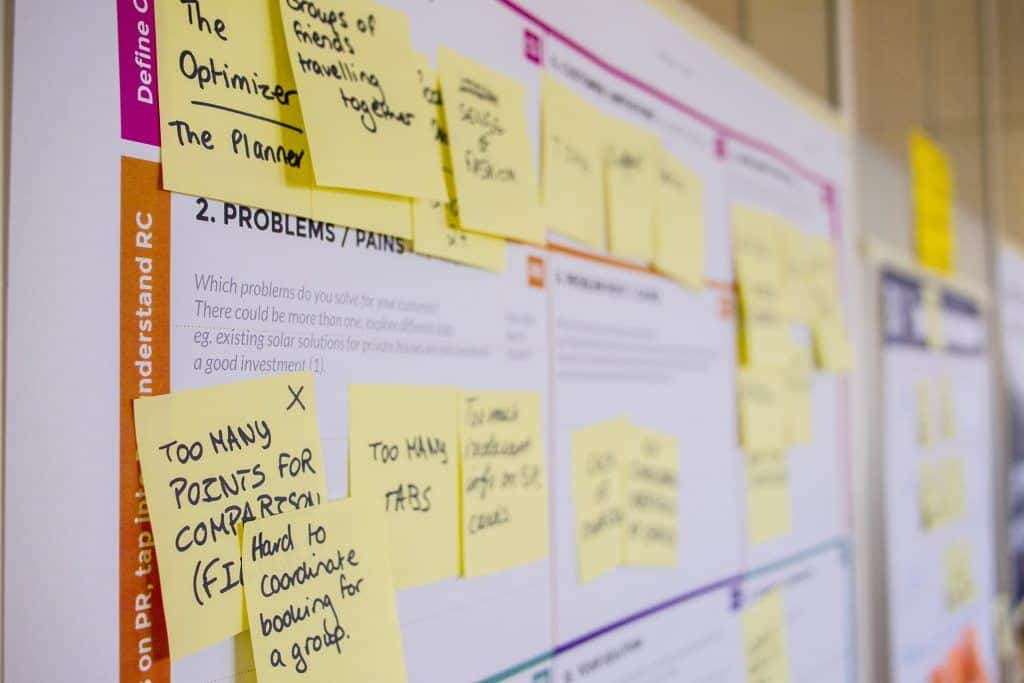
The online customer journey often begins with a Google search and leads through your website to a point of contact or purchase. Every screen, every click, and every wait time influences the customer experience. A B2B service provider with an unclear services page loses potential customers before they even make contact. An ecommerce store with a slow checkout process sees shopping carts abandoned. By mapping out and testing the customer journey step by step, you’ll discover where customers drop off and why. Tools such as heat maps, analytics, and user testing can help with this. In practice, it often turns out that small adjustments—such as a clearer call to action, faster load times, or a better mobile experience—can already lead to more conversions and satisfied customers.

Improving customer service and communication

Customer service is one of the most visible aspects of the customer experience. How quickly do you respond to questions? How easy is it to reach you? Do customers receive a personalized response or a standard template? For small and medium-sized businesses, this is often a competitive advantage: you can be faster and more personalized than larger companies. But only if you organize it properly. A common mistake is having contact options scattered across email, phone, WhatsApp, and social media, without clear guidelines on who handles what. Customers then have to repeat their question or receive conflicting answers. By using a single centralized system—such as a CRM or customer service tool—you maintain an overview and ensure consistent communication. This immediately boosts trust and satisfaction.

Personalizing offers and content

Clients appreciate it when you show that you understand them. Personalization can be simple: a returning visitor to your ecommerce store sees products that align with previous purchases, or a newsletter contains tips tailored to the stage a client is in. For B2B companies, personalization can mean showcasing case studies from the visitor’s industry, or linking white paper downloads to follow-up actions such as a personalized consultation. Personalization only works if you have data and use it intelligently. Think of segmentation in your email list, dynamic website content, or smart product recommendations. Many small and medium-sized businesses think this is only feasible for large companies, but with tools like marketing automation and AI integrations, it can be effectively implemented on a smaller scale as well.

When is customer experience the right focus—and when isn’t it?

Improving customer experience makes sense if you already have a working product or service and want to grow by serving customers better. It’s less relevant if you’re still searching for product-market fit or if you haven’t yet got the basics—such as accessibility, delivery time, or product quality—in order. Start there instead. Customer experience is also not a quick win: it requires ongoing attention, measurement, and continuous improvement. If you expect a single improved contact page to solve all your problems, you’re overestimating its impact. Customer experience works best when you integrate it into your business operations, not as a standalone project. Think about where customers currently experience the most frustration and address that first. That will yield better results than making small adjustments everywhere at once.

Want to apply this to your business? Monkey Vision helps SME entrepreneurs with web design, SEO and smart digital solutions. Schedule a no-obligation meeting and find out what's possible for you.

Schedule an introduction

Frequently Asked Questions

No, customer experience and customer satisfaction are related but not the same. Customer satisfaction measures how satisfied a customer is after a specific moment, such as after a purchase or service interaction. Customer experience is broader: it encompasses all emotions, thoughts, and interactions throughout the entire customer journey, from initial exploration to aftercare. You can have a satisfied customer who nevertheless did not have a strong customer experience, for example because the process was cumbersome but the end result was good. Conversely, a customer may have had a positive experience due to quick assistance and clear communication, even if the product wasn’t perfect. For small and medium-sized businesses, it’s important to measure both: customer satisfaction provides insight into outcomes, while customer experience helps you understand how you get there.

That depends on where your bottleneck lies. If you have few customers because nobody knows you, then marketing is the right focus. But if you’re getting visitors or leads and they aren’t converting, or customers aren’t returning, then customer experience is the key. In practice, we often see with small and medium-sized business (SMB) clients that a better customer experience leads to higher conversion rates and more repeat customers, making your marketing budget more effective. You can’t compensate for a poor customer experience with more ads. In fact, the more traffic you drive to a website or store with a poor experience, the more potential customers you lose. Start with your current customers: if they’re satisfied and keep coming back, you can invest with greater confidence in acquiring new customers through SEO or ads.

Start by mapping out the customer journey: from initial contact through to after-sales support. Walk through that journey yourself, or ask a colleague or friend to do so. Note all the moments where something is unclear, slow, or frustrating. Also ask recent customers what they found pleasant and what they found difficult. Next, prioritize the issues that occur most frequently or have the greatest impact. These are often simple matters: an unclear contact page, slow response times to emails, unclear delivery times, or a complicated ordering process. Address one or two areas for improvement, measure the effect, and move on to the next one. Improving the customer experience isn’t a one-time project but an ongoing process. Tools like heat maps, Google Analytics, and customer satisfaction surveys help you objectively measure where improvement is needed.

The best approach depends on where you are now and which customer touchpoints have the greatest impact on your revenue. Want to know where your biggest opportunities lie? Schedule a free 30-minute UX scan with Monkey Vision. We’ll walk through your website and customer journey in real time and immediately provide you with three concrete areas for improvement that you can tackle this month. You’ll also receive an honest assessment of which steps will have the greatest impact for your type of customers and industry. No sales pitch—just practical advice based on experience working with dozens of small and medium-sized businesses. Want to learn more? Check out our approach to web design and UX optimization, or contact us directly to schedule a scan.

About the author

Monkey Vision

Monkey Vision is a full-service digital agency at Nijmegen, specializing in web design, SEO, and AI automation for small and medium-sized businesses. The knowledge base has been compiled by our team of online strategists and is continuously updated based on current insights.

Publication date: June 12, 2026
Last updated: June 12, 2026